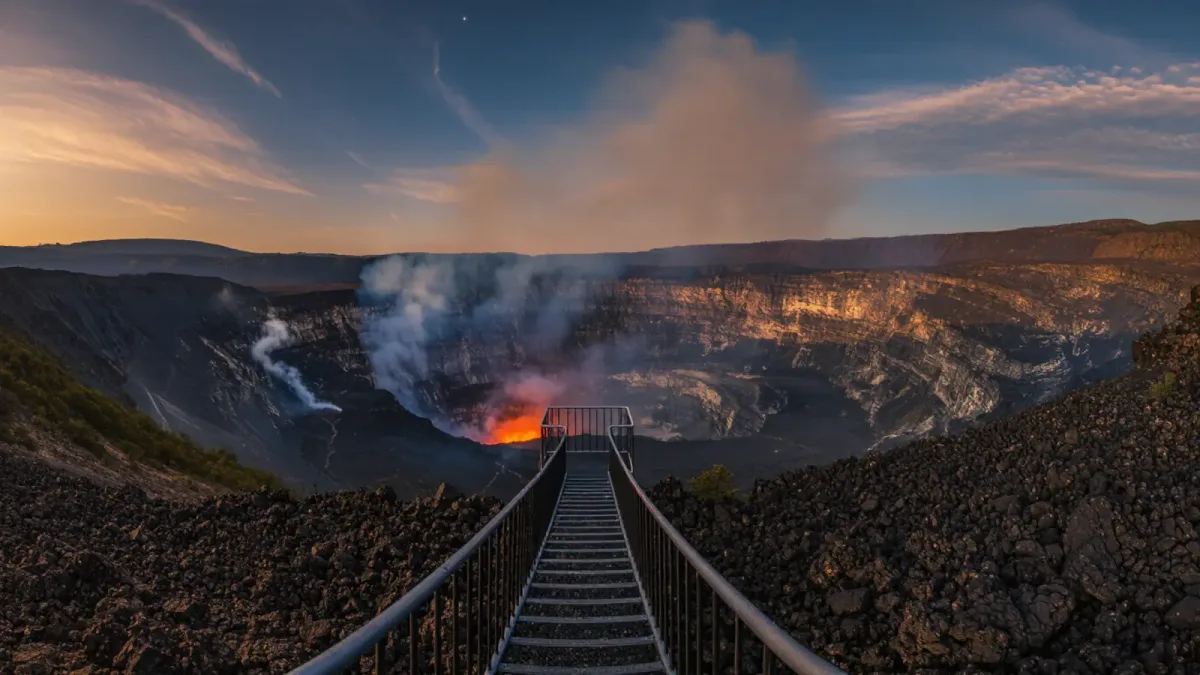
Kīlauea's Halemaʻumaʻu eruption continues in episodic phases through mid-2026, with lava fountains recurring roughly several times per month since late 2024 — including a March 10, 2026 episode whose plumes were captured in NASA Earth Observatory satellite imagery. Per Hawaiʻi Volcanoes National Park, the established crater-rim viewpoints remain open, and the practical question for visitors is no longer whether lava shows, but where to stand when an episode begins.
This publication reports volcano viewing logistics as published by the National Park Service and USGS; eruptive activity is unpredictable, so check current status before any visit.
Where are the viewing areas?
Per the park's published guidance, the principal viewing areas line the rim of the summit caldera: Keanakākoʻi Overlook, the most popular vantage, requires a reservation; Uēkahuna and the Kīlauea Overlook at Kūkamāhuākea sit along Crater Rim Trail; and Wahinekapu (Steaming Bluff) and Kupinaʻi Pali offer additional sightlines across the caldera. Distances from the active vents mean visitors see glow and fountains across the crater rather than up-close lava — the summit viewing model that has applied throughout this eruption. travel news coverage.
How do episodes work, and when should you go?
- Episodes begin and end without multi-week reliability: a given episode may last hours, then pause for days. By late June 2026 the eruption had run through more than forty numbered episodes since it began in December 2024.
- Per USGS volcano updates, activity status is published daily, and the park posts viewing-area openings alongside it.
- Evening and night visits show the glow best; daytime episodes reveal the full height of fountains, which have repeatedly topped several hundred feet during high fountaining phases.
What does an island visit look like now?
For planners, the volcano has re-entered the standard island itinerary rather than replacing it: a Hawaii Island stay can budget one evening at the park around a current episode without rewriting the rest of the trip. Build flexibility — a two-night window on the island's east side gives better odds of catching an active phase than a single evening. Check the USGS update page and the park's eruption-viewing page on the day you go; both are updated as conditions change, and access rules have been adjusted repeatedly through the eruption.