The reliable method for choosing street food is not avoiding it but reading it. Six signals separate the stall that feeds a neighborhood daily from the one that feeds travelers once: a queue of locals, a short menu cooked in front of the customer, high turnover with nothing sitting warm for long, visible heat on the cooking surface, separate money handling, and a stall whose surfaces look scrubbed rather than merely wiped. Travelers' health guidance points the same way — food freshly cooked and served hot carries the lowest risk (CDC travel health guidance on food and water safety). A street meal chosen this way is routinely the best food and the best value of a city trip.
What Are the Six Signals, in Order of Weight?
- The local queue. Office workers, school runs, families — a line of residents is a real-time safety inspection performed daily by people who can go anywhere. The length matters less than the local composition.
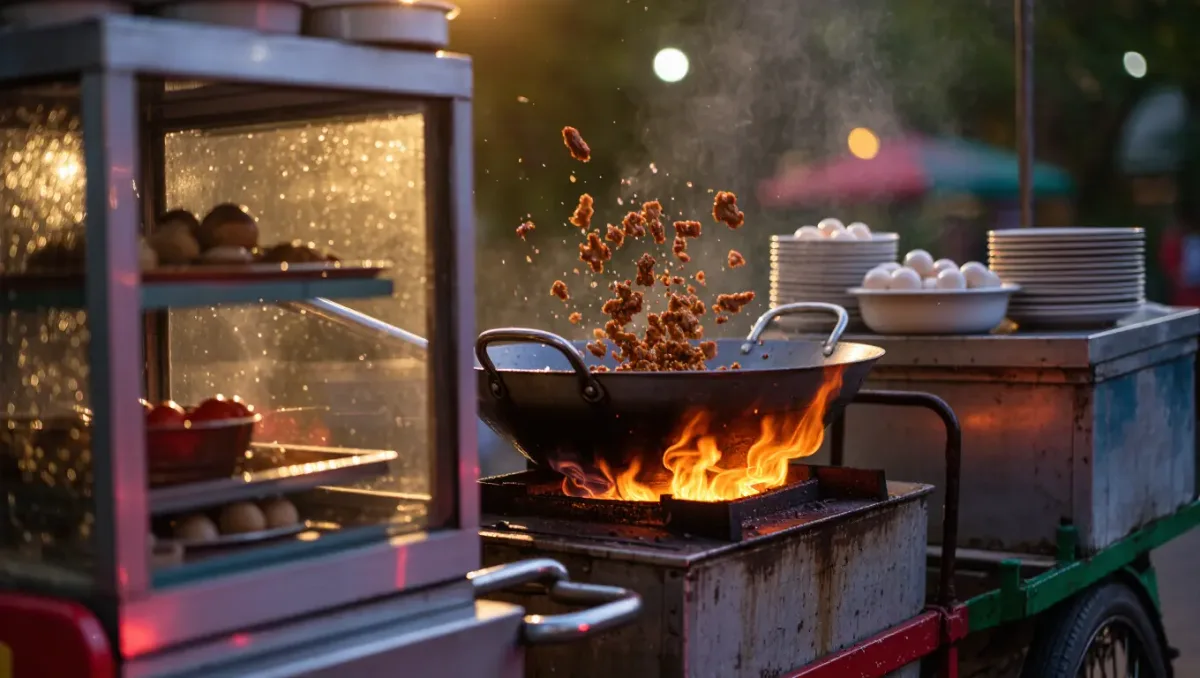
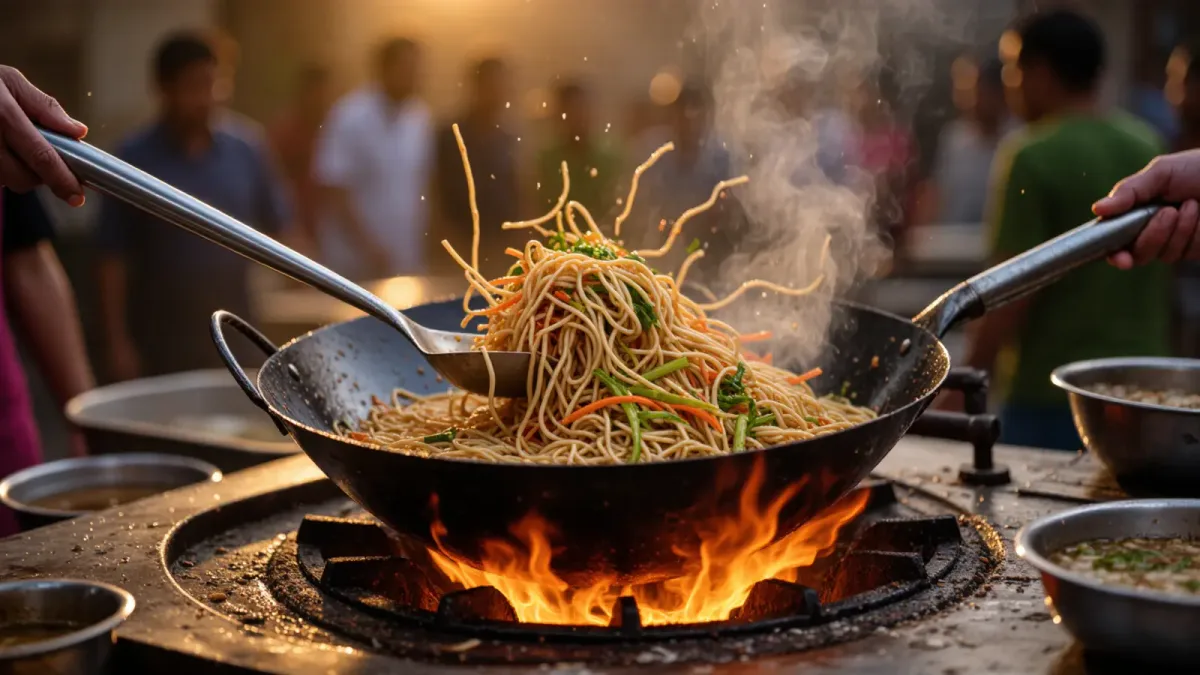
- Cooked in front of you, served hot. High heat on a visible wok, grill, or fryer kills what time and temperature allow to survive. Dishes assembled cold from pre-cooked components carry more risk than anything fired to order.
- High turnover, short menu. One to four dishes selling all day means ingredients run out and restock daily; a wide menu means deep freezers and long-held stock.
- Nothing sits in the danger zone. Sauces held warm and stirred all day pass; cut fruit, pre-cooked rice held at room temperature, and cream-filled pastries at noon in the tropics do not.
- Money handled separately. The best stalls take payment with one hand and prepare food with the other, or run a dedicated cashier. Soap and a water bucket at the station is a strong plus.
- Scrubbed, not wiped. Worn but clean boards and woks beat gleaming stainless wiped with the day's first cloth. Look at the cloth: one cloth for the counter and one for the plates is the tell.
Which Foods Are the Safest Street Choices?
High heat and low water are the traveler's friends. Deep-fried items — fritters, falafel, tempura, churros — are cooked at temperatures that solve most problems and sell fast enough to never sit. Grilled skewers, roasted chestnuts, flatbreads baked to order, and noodle dishes fired in a screaming wok rank just behind. The higher-risk end is predictable: raw or pre-cut produce, garnishes and herbs washed in unknown water, ice in drinks at questionable stalls, shellfish displayed raw on ice, and dairy desserts unrefrigerated in heat. Bottled or freshly boiled drinks close the loop.
Does Time of Day Change the Risk?
Sharply. The morning and mealtime hours are when turnover does its protective work — a stall selling through stock three times before noon never serves yesterday's. The risky window is the dead stretch: the same stall at 15:30 in tropical heat has been holding its sauces for hours. Meal-adjacent timing also buys the freshest batches, since stalls cook to the rush. The one exception: markets that open at dawn for a breakfast trade are among the safest meals anywhere, precisely because the stock is freshest then.
What Do Local Health Systems Say About Street Food?
Formal oversight varies, and the traveler cannot inspect a license at a hawker cart. Two sourced anchors: Singapore's hawker centres run a government grading system for stalls, displayed publicly (National Environment Agency, Singapore); and international travel health guidance, including CDC guidance, consistently prioritizes freshly cooked, steaming-hot food over any held or raw alternative. Where licensing exists — Singapore's centres, Mexico's regulated fonda culture, much of Southeast Asia's registered night markets — the stalls cluster into managed courts where turnover and inspection compound each other's benefits.
How Should the First Street Meal of a Trip Be Chosen?
Calibrate, then relax. The first day, eat at the most obviously busy, most clearly cooked-to-order stall available — the queue test at its strictest. If the stomach holds, the second and third days can trade some safety margin for adventure: the longer menu, the stranger ingredient, the quieter vendor with the good reputation among taxi drivers. Reverse the order and the trip's food memory gets written by its worst afternoon.
FAQ
Is street food less safe than restaurants?
Not inherently. A high-turnover stall cooking to order can be safer than a restaurant kitchen serving a slow Tuesday buffet. What matters is heat, speed, and turnover — visible at a stall, invisible behind a restaurant door (CDC food and water guidance).
How can water and ice risk be judged?
Sealed bottles are the safe default anywhere water quality is uncertain. Ice made by a busy vendor from filtered supply — common at established stalls — is generally fine; the crushed ice from an unknown cooler at the beach is the case to decline.
Are vegetarian options safer at street stalls?
Often, yes: vegetable dishes cooked at high heat avoid the storage questions that meat raises, though washed raw garnishes and pre-cut fruit keep their own risks. Cooked-and-hot remains the test regardless of ingredient.
What should be done if a street meal does not agree with the stomach?
Standard travel health practice: hydration with clean fluids and electrolytes, rest, and seeking medical care if symptoms are severe or persist beyond a couple of days. A travel health consultation before the trip covers destination-specific advice (CDC travel health guidance).