A good evening out starts before you order anything. The menu tells you more than what the kitchen cooks. It tells you how the bill will build up, dish by dish and line by line. Learn to read it, and you will rarely get a shock at the end of the night.
Most diners scan the dishes and stop there. That is a mistake. The format of the menu, the small printed notes, and the way charges appear at the bottom matter just as much as the food itself.
Start With the Format of the Menu
Restaurants list food in two main ways. As Wikipedia explains in its overview of the menu, some menus list each dish separately with its own price. This is the à la carte style. Others work as table d’hôte, where a fixed sequence of courses is offered for one set price.
This choice shapes your total more than anything else. An à la carte bill grows with every plate you add. A set-price menu caps the food cost, but extras can still stack up around it. Neither format is better. They reward different habits. If you eat light, per-dish pricing is flexible. If you know you want three courses, a fixed sequence keeps things simple. We covered a connected angle in Breakfast Traditions Around the World: What Locals Eat Before Ten.
What a Fixed Price Actually Covers
Set-price eating has a long history. Older table d’hôte houses served whatever the house had chosen that day, and charged every customer the same fixed price. The written menu then changed things, because it let customers spend as much or as little money as they chose.
Today you should still ask what a set price includes. Courses, yes. But bread, water, coffee, and service are separate questions in many places. A menu that looks cheap can grow once each side item is priced on its own. Read the small notes under the dishes. They usually state what comes with the price and what does not.
Service Charges: The Line That Surprises People
A service charge is not the same as a tip you choose to leave. In the plain terms of Wikipedia’s article on fees and service charges, a service fee or surcharge is a fee added to a customer’s bill. In restaurants, such charges often stand in for tips. Some menus call this a mandatory gratuity.
Rules differ by region. In some US states, restaurants that charge a service charge in place of tips must pass that money to their wait staff. In at least one state, the house may keep it. As a guest you do not control these rules, but you can read the menu and the bill. If a percentage service charge applies, it sits on top of the listed dish prices. Budget on the final number, not the sticker one.
Where You See the Menu Matters Too
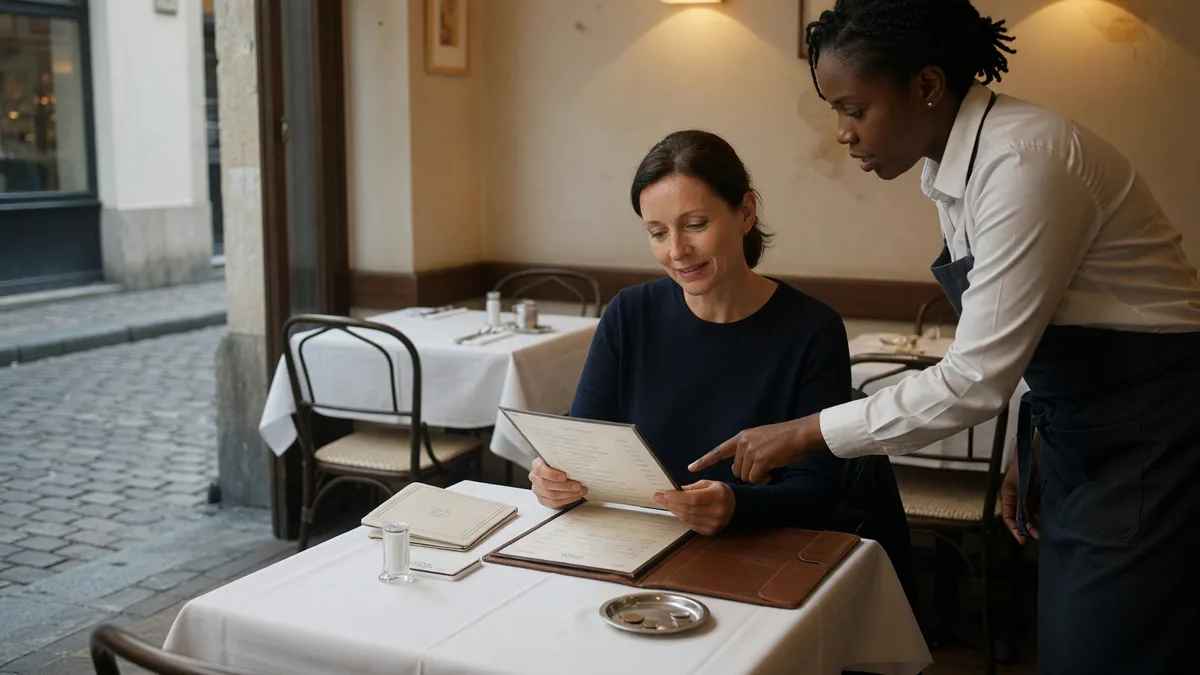
Menus reach you in several formats. They are commonly printed on paper and given to diners at the table. They can also appear on display boards inside the establishment, outside the restaurant to attract passersby, or on digital screens. Since the late 1990s, many restaurants have also put their menus online. Readers following this should also see How Restaurant Reservation Deposits and No-Show Fees Work.
Use that. Check the menu online before you book, and you will know the price range before you commit to the evening. Look for the same three things every time: how dishes are priced, whether a fixed-price option exists, and whether a service charge is mentioned anywhere.
Conclusion: Read First, Order Second
A menu is a price list in nice clothes. Read the format, check what a fixed price includes, and find the service charge line before you order. Ten minutes of reading saves you from the only bad surprise a restaurant can hand you: the one that arrives with the bill.
This article is general information, not travel or financial advice for a specific trip.