For most city breaks the answer comes down to length: a hotel is the simpler choice for one- or two-night stays, while an apartment starts to pay off at three nights or more, or for groups of three to four who can split the rate. The average trip of an EU resident is about 3.3 nights (Eurostat, 2024), so most readers sit close to the crossover point — which makes the details below worth a few minutes. The comparison here is based on published rates and house rules on major booking platforms as of January 2026, chosen for price range, central location, and cancellation terms.
This site publishes information, not booking advice; rates and policies change, so confirm details with the property before paying.
When a Hotel Is the Better Choice?
Hotels are built around short stays. The practical advantages compound over one or two nights:
- A staffed front desk holds luggage before check-in and after check-out, which matters when arrival is at 11:00 and departure at 19:00.
- Daily housekeeping means no cleaning tasks and no cleaning fee.
- Late arrivals are routine; a room held under a credit card is standard practice.
- Breakfast, where included, removes one morning decision entirely.
In most European cities, centrally located three-star hotels list doubles from roughly €90 to €160 per night in low season, with the range widening sharply around trade fairs and holidays (published rates on major platforms as of January 2026).
When an Apartment or Short-Stay Rental Wins?
Apartments reward longer stays and larger parties. Once three or four travelers split a unit with two bedrooms and a kitchen, the per-person cost frequently undercuts two hotel rooms in the same district. A kitchen converts two restaurant meals a day into one, and extra space matters more on a five-night stay than on a weekend. Registration requirements apply: since May 2025, the EU requires registration numbers on short-term rental listings, which gives travelers a way to filter out unregistered units (European Commission, 2025).
What Does the Total Cost Actually Include?
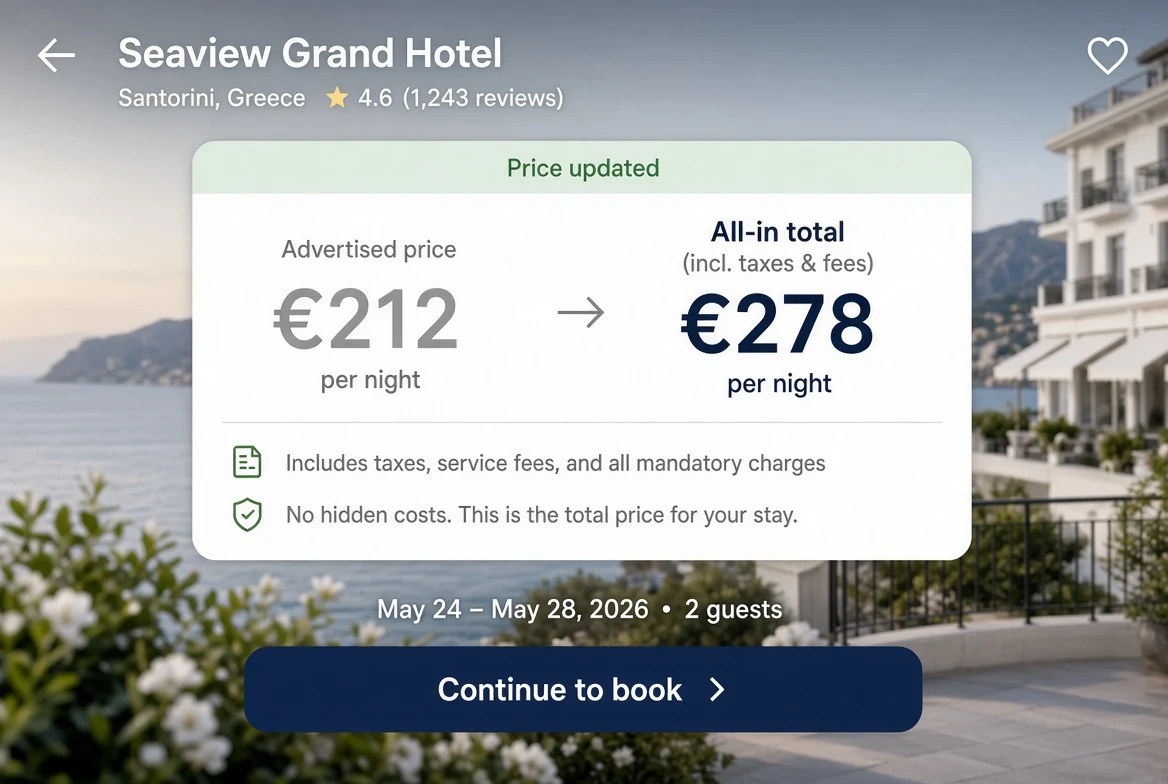
Headline rates mislead in both directions. A fair comparison adds these lines to both columns:
| Cost item | Hotel | Apartment |
|---|---|---|
| Cleaning | Included | Often €40–€90 flat fee per stay |
| Breakfast | €10–€25 per person per day, sometimes included | Groceries, self-catered |
| City tax | Per person, per night, collected at desk | Per person, per night; rules vary |
| Deposit | Card pre-authorization at check-in | Sometimes €200–€500, refunded after inspection |
On a two-night stay for two people, a €120 hotel room and a €140-per-night apartment with a €60 cleaning fee end up within a few euros of each other — before breakfast shifts the balance.
How Do Check-In and House Rules Differ?
Hotels run a desk; apartments often run a lockbox, a meeting, or a courier. Self-check-in after 18:00 is common and well documented in listings, but a failed code at 22:00 in the rain is a real risk to price against. Apartments may also carry quiet hours from 22:00, a no-guests rule, and a checkout inspection. Hotels rarely ask more of a guest than a departure time.
A Simple Decision Rule
- One or two nights, arriving late, sightseeing all day: hotel.
- Three or more nights, or three or more travelers, or a kitchen matters: apartment.
- Uncertain about either: filter hotels by flexible cancellation and apartments by registration number, then compare total stay cost, not nightly rate.
The neighborhood matters more than the building type. A modest hotel two tram stops from the center routinely beats a designer apartment forty minutes out; selection criteria should always name location and walkability first.
FAQ
Are apartments always cheaper for families?
Not always, but usually for four or more people. Two hotel rooms for a family of four can cost double a two-bedroom apartment in the same district; a hotel family room narrows the gap. Compare total stay cost including cleaning fees and city taxes (rates as listed, January 2026).
Do apartments have staff to hold luggage?
Rarely. Some hosts allow bag drop before official check-in if arranged in advance; otherwise use station or airport left-luggage services. Hotels hold luggage as a standard courtesy, which is one of their quiet advantages on a short break.
Is breakfast included in hotel rates?
In continental Europe it is frequently a separate line of €10–€25 per person, though many chain and independent hotels bundle it in direct bookings. Check the rate details rather than the listing photos; the difference can be €40 or more over a weekend for two.
Which is safer for a first visit to a city?
A hotel offers a staffed desk, fixed check-in hours, and a public area at all hours, which many first-time visitors find reassuring. A registered apartment with self-check-in is equally legitimate; verify the registration number and read recent reviews about the key collection process before booking.