A guaranteed reservation — one secured with a credit or debit card — is standardly held for the entire night of arrival, not released at a set hour; this is the practice across major chains and booking platforms (platform reservation terms as published, May 2026). The real late-arrival risks sit elsewhere: reduced-desk and boutique properties with staffed hours ending at 18:00 or 20:00, apartment check-ins that run on lockbox codes or in-person meetings, and no-show charges at properties that require arrival-time confirmation. Arranging a late check-in is a five-minute task if done before departure day — and an expensive one if skipped.
This site publishes information, not booking advice; policies vary by property, so confirm in writing when arrival is after 20:00.
When Does a Late Arrival Become a Problem?
The room itself is rarely the issue; access is. Three situations require action:
- The desk closes. Many independent three-star properties and most boutique hotels run staffed reception from morning to early evening. After close, some hand over to a night porter, some leave a phone number, some switch to self-service codes.
- The booking requires confirmation. Some properties — particularly apartments — state a check-in window and ask guests to send arrival times; unconfirmed late arrivals can be treated as no-shows under the rate's cancellation terms.
- The check-in is a meeting. An apartment host who meets guests in person is a person with a schedule; a 01:30 arrival needs a plan made days ahead, not a text message from the runway.
What Should Be Done, and When?
| Before arrival | Action |
|---|---|
| At booking | Add the expected arrival time in the booking note; flag "late arrival after 22:00" if known |
| 3–7 days ahead | Email or call the property; confirm the access method for the actual arrival hour |
| Day of travel | Message if the estimate shifts by more than an hour |
| On the spot | Keep the booking confirmation and the property's phone number offline — roaming data fails at the door |
Written confirmation of the late arrival — an email reply, not just a sent message — is the document that protects against a wrongful no-show charge (reservation practice as published, May 2026).
How Do the Check-In Methods Differ After Hours?
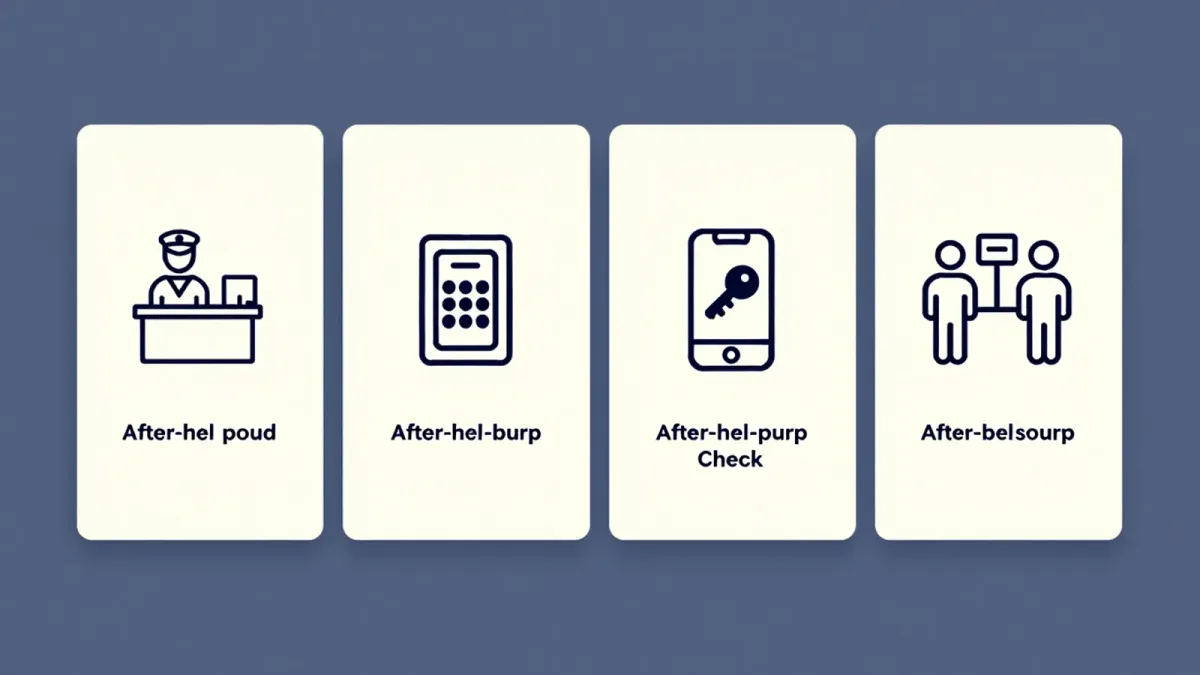
- Staffed desk or night porter: the simplest case. The name on the reservation and a passport or ID are enough; card guarantees hold the room.
- Key box or lockbox: the property emails a code and, sometimes, the room number only on the day. Codes have a way of transposing; save the email offline and check the code before the flight lands.
- Smart lock with app or PIN: requires the property's app installed, account created, and battery-working phone. Set this up at home, not in the street.
- In-person host meeting: agree the exact meeting point and a backup contact. A 15-minute delay tolerance should be stated on both sides.
What About No-Show Charges?
Under a standard guaranteed rate, a same-night cancellation or failure to arrive costs the first night, occasionally the whole stay under advance-purchase terms. Two protective habits: book flexible rates when the arrival time is uncertain, and never let a late flight become a silent no-show — a one-line message to the property the moment a delay appears costs nothing and prevents the charge. Properties generally cannot release a card-guaranteed room, but a property that never received an arrival time has more discretion than one holding a written confirmation.
Does Late Check-In Cost Extra?
At staffed properties, no — the rate covers the room from the agreed check-in time regardless of arrival hour. Apartments occasionally add a fee for check-ins after a stated hour, commonly €20–€50, precisely because a person must attend; the fee should appear in the house rules before booking, not on arrival. Twenty-four-hour desks are the norm at upper-tier chains, which is why late arrivals favor them.
FAQ
Will the hotel cancel my booking if I arrive after midnight?
Not if the reservation is guaranteed with a card; the room is held for the night as standard practice. Non-guaranteed bookings and apartments with unconfirmed arrival times are the cases at risk — confirm the hour in writing before travel.
How late can check-in happen at an apartment?
As late as the access method allows: lockbox and smart-lock check-ins run all night, while in-person meetings depend on the host. Late-night meeting fees of €20–€50 are common and should be stated in the house rules (listing practice, May 2026).
What documents are needed for a late check-in?
The same as any check-in: passport or national ID for each adult, the reservation confirmation, and the card used to guarantee the booking in some properties. In much of Europe and beyond, registration law requires the property to record guest identities.
Should an estimated arrival time be given at booking?
Yes, always. It costs nothing, sets expectations, and triggers the property to flag the reservation. Update the estimate if the delay exceeds an hour; silence is what creates no-show disputes.