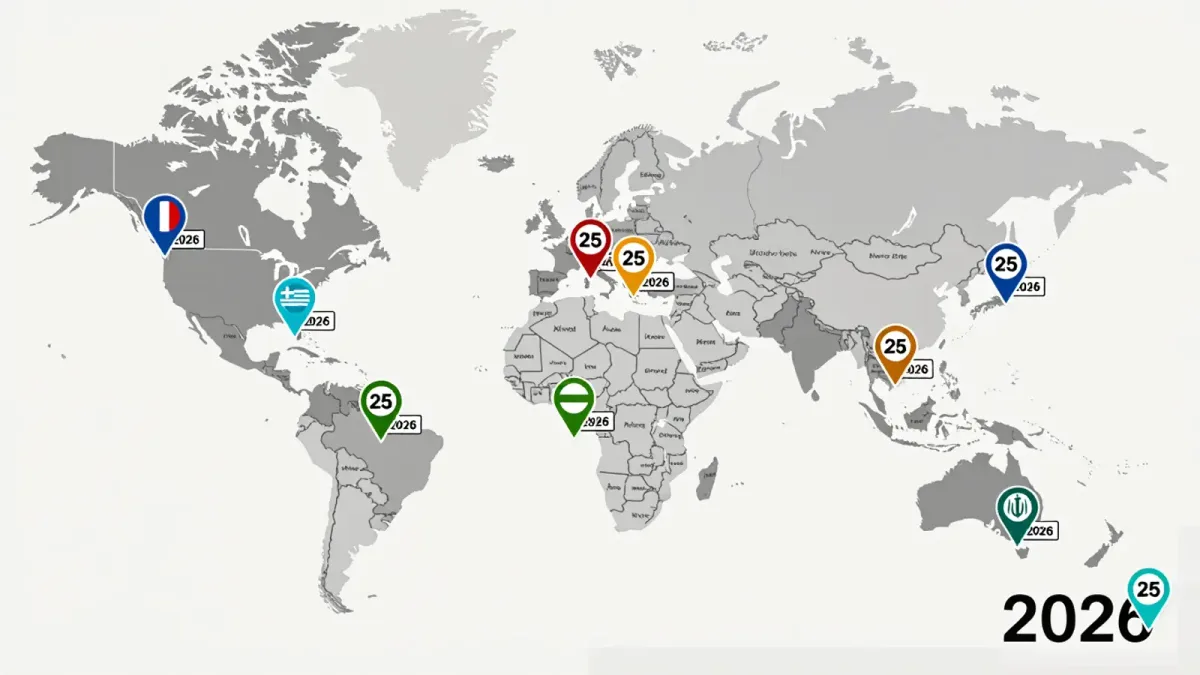
UNESCO added 25 new sites to the World Heritage List at the 48th session of the World Heritage Committee in Busan, Republic of Korea, which closed on July 29, 2026 — per UNESCO's own announcement. For travelers, the list is less about paperwork and more about signage, infrastructure, and future itineraries: inscription typically brings conservation funding, visitor management, and the famous marker that reshapes a destination's profile.
This publication reports the inscriptions as announced by UNESCO; site access and visitor facilities develop over time, so check local sources before planning a trip around any new listing.
Which new sites matter most for city-break and destination travelers?
- D-Day Landing Beaches, France — the Normandy landing sites, long visited on day trips from Bayonne-to-Caen itineraries, now carry World Heritage status.
- Mount Olympus, Greece — Greece's mythic and natural landmark joins the list, a boost for the Litochoro trailhead region south of Thessaloniki.
- Aalto Works, Finland — thirteen modern buildings and ensembles across Finland built between 1928 and 1988, putting architect Alvar Aalto's output on the map for design-focused city breaks in Helsinki and beyond.
- Okefenokee Wilderness, United States — per press coverage, the sole new US inscription, protecting the great blackwater swamp of southern Georgia.
- Alamūt Castle and related properties, Iran — the storied mountain fortress complex northwest of Tehran.
How quickly does inscription change a visit?
In the short term, often barely: boundaries and legal protection arrive first, visitor infrastructure later. What changes sooner is attention — guidebooks, tour operators, and national tourism boards move quickly to attach World Heritage branding, so newly listed sites typically see rising visitor numbers within a season or two. Travelers who prefer sites before the crowds have a short window: per UNESCO, some sources count the additions at 26 with extensions to existing properties, and the practical takeaway is that a destination list built in August 2026 will already be out of date by next summer.
What happened at the session itself?
The committee met in Busan from July 20 to 29, 2026, with deliberations on nominations beginning July 24 — the first Korean host city for the session. Beyond the new inscriptions, sessions of this kind also weigh endangered listings and boundary changes, which travelers to already-listed sites may notice as revised access rules in future seasons.