Zermatt is the rare resort that functions as a genuine village visit: a car-free Valais town at 1,620 meters under the Matterhorn, entered by train from Täsch or Brig, walked or shuttled on electric vehicles inside, and — in summer as much as winter — a working plan for a two-day alpine break with lifts running, trails open, and the mountain itself doing most of the scenic work. Combustion cars have been barred from the valley since 1947, a ban that shaped everything about how the village feels and operates today. This primer covers arrival, layout, and a realistic summer plan; selections are chosen for walkability, variety, and price range as listed in July 2026.
This site publishes information, not professional travel advice; lift schedules and fares change with the seasons, so confirm before you go.
How do you arrive, and how does the car-free rule work?
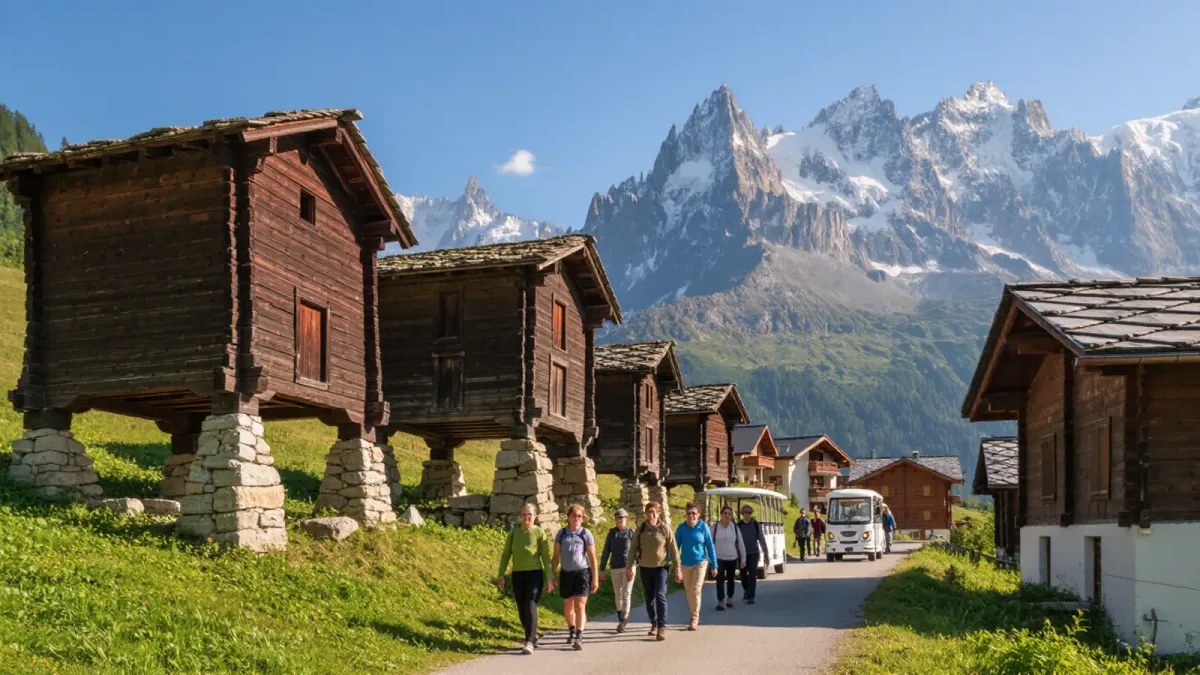
The car stops at Täsch, the valley terminal five kilometers and a shuttle train from Zermatt, where the multi-story car park hands traffic over to the railway; from Brig or Visp, the Matterhorn Gotthard Bahn climbs the valley directly. Inside the village, the replacement fleet is electric — taxis, hotel shuttles, and small delivery vehicles share streets built for carts — and luggage moves the way it has for decades: hotel porters meet trains, and the walk from the station to most addresses runs under fifteen minutes on foot. Helicopter transfers aside, there is no road in, and the village's small scale — everything of interest within a 25-minute walk — is the rule's practical dividend.
What should you do in two summer days?
- Day one: the Gornergrat. The rack railway from the station, running since 1898, climbs to 3,089 meters and the observatory terrace facing the Matterhorn across the gorner glacier — the classic first-day outing, booked for a morning slot to beat the afternoon cloud as of 2026 practice. The mid-station at Riffelberg and the Riffelsee lake walk below supply the reflective Matterhorn-in-water photograph without the summit ticket's cost.
- Day two: the village and the Sunnegga side. Morning in the village lanes — the Hinterdorf quarter's 16th-century larch barns on stone mushrooms are the oldest fabric in town — then the Sunnegga funicular up to the Leisee lake and the marmot viewing area, an easy half-day at family pace.
- The flexible slot: Matterhorn Glacier Paradise. The highest cable-car station in Europe at 3,883 meters, reached via Furi and Trockener Steg; spectacular, priced accordingly, and best held for the clearest forecast day of the two.
How does Zermatt fit a larger trip?
As the alpine leg of a city break chain: the village sits about three and a half hours from Zürich by rail, with the Glacier Express offering the slow scenic option from St. Moritz or Lucerne connections. For a Swiss itinerary built on cities — Zürich, Basel, Bern — Zermatt supplies the one-night mountain contrast, and its car-free logic actually simplifies the chain: no rental car, no parking, bags met at the platform. The honest qualifier is price: the village runs at Swiss-resort rates year-round, with summer lifts and rooms in the premium bands as of 2026, which is why the two-day structure — one big excursion, one village-and-nearby day — is also the budget-disciplined one.
The village itself deserves one practical paragraph. The core splits into a lower street along the river and an upper village lane, with the station at the join; the Hinterdorf quarter behind the church holds the oldest buildings, and the Bahnhofstrasse running southwest carries the shops and terrace restaurants. Lift queues concentrate between 09:00 and 11:00, so a breakfast-first start puts you ahead of them; the village walking hours in early morning and after 17:00 belong to residents and the trail-running crowd, and are the best time to photograph the lanes without crowds. Prices follow altitude and season rather than the calendar alone, and as of 2026 the visitor tax levied per night by the municipality applies on top of room rates, funding the mountain rescue and trail maintenance that the car-free regime summer crowds depend on.
When should you go?
The summer season runs from late May to late October for the main lifts, with July and August the warmest and busiest; June and September trade some lift altitude for quiet lanes and better room rates. The village's year-round oddity is snow: the glacier ski area above the Matterhorn Glacier Paradise operates in every month, which makes Zermatt one of the few places where a July morning can end on skis and an afternoon on a sunlit terrace — a contrast the village has traded on for a century and a half.