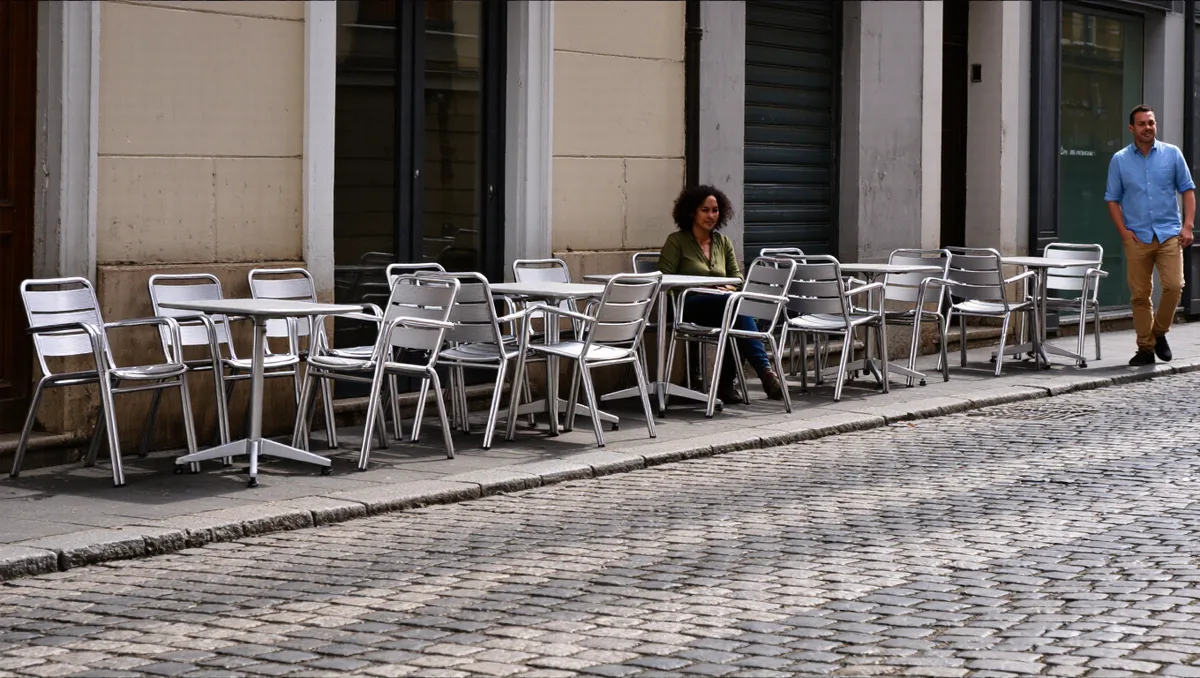
The best-kept secret in travel is usually a town one train stop past the famous one. It has the museums, the market hall, the good coffee, and the walkable center. What it lacks is the queue, the cruise-ship crowd, and the price tag that comes with them. Those are the underrated destinations worth the detour: places the general opinion sits lower than the actual experience deserves.
That is close to the dictionary sense of the word. To call something underrated, as Merriam-Webster defines it, is to say it is rated or valued too low. Dictionary.com puts it the same way: underrated means evaluated too low, underestimated or undervalued. The word carries a small argument in it. You are saying the crowd has mispriced a place, and you can see the gap from where you stand.
This piece is about how to spot that gap before you book, and what to do with it once you find it. It is not a ranking. There is no methodology behind a list of towns someone calls hidden, and a list without criteria is just a mood. What follows is a way of looking.
What Makes a Destination Underrated?
An underrated destination is not the same thing as an obscure one. Plenty of obscure places are quiet because there is little reason to go. An underrated place has real substance — good food, working transit, buildings worth looking at — and a reputation that has not caught up. The gap between the two is the opportunity.
Three signals usually point to it. First, the town appears as a footnote in coverage of a bigger neighbor: the day trip, the stop on the way, the half-day add-on. Second, locals from the famous city nearby go there on their own days off, which tells you the amenities are real. Third, the same hotel room, meal, or museum ticket costs noticeably less than it does an hour away, for reasons of reputation rather than quality.
Travel writers notice this pattern too. In a recent roundup of underappreciated European picks, CNN's Maureen O'Hare pointed to Dessau in Germany — home of the Bauhaus architecture and design movement — alongside the historic Italian cities of Verona and Padua in what she called Italy's underrated Veneto region. Padua sits a short rail ride from Venice and has frescoes, a market, and a university older than most countries. Verona has a Roman arena still in use. Neither lacks for things to do. Both live in Venice's shadow.
How to Find Your Own Underrated Town
The search is mostly a matter of reading maps and timetables sideways. Here is a practical sequence.
- Start from the famous city, not away from it. Draw a circle of one to two hours by rail around any major destination. Every stop inside that circle is a candidate.
- Check what the town actually has. A cathedral, a regional museum, a daily market, a theater, a university — any two of these suggest a place that functions as more than a postcard.
- Look at who visits. If guidebooks mention it only as a day trip, but the transit operator runs frequent service all day, people are moving through it constantly. Some of them are staying.
- Compare two or three prices. Lodging, one sit-down meal, one paid attraction. If the smaller town consistently comes in lower for comparable quality, the reputation gap is working in your favor.
Our analysis: the single strongest tell is the day-trip framing itself. When every guide says "you can visit X on a day trip from Y," the writer is telling you X has enough to fill a day. The next question is simply why you would sleep in Y instead.
The Small-Town Price, the Big-City Menu
The brief behind this piece asks about overlooked towns that deliver big-city amenities at small-town prices. The pattern holds across regions because the causes are structural, not local luck. A regional capital — the town where the province's courts, hospitals, theater, and market sit — usually has a professional class that demands good restaurants and decent hotels. It built those amenities decades ago. Mass tourism then arrived at the famous city nearby and never priced in the neighbor.
What that means in practice: you eat in a dining room where most tables are locals, you walk ten minutes from the station to the old quarter, and the ticket to the main museum is bought on arrival rather than weeks ahead. The trade-offs are real and worth naming. Fewer flights, since small cities are often reached by rail from a hub. Fewer English-language services in some regions. Opening hours that follow local rhythms, so a town can feel shut on a Monday afternoon and full by eight in the evening. None of these are disqualifying. They are the texture of the deal.
When the Detour Beats the Headline City
Timing decides most of it. An underrated town shines when the famous neighbor is at its worst — high season, a festival that books out the region, or a heat wave that turns a crowded square into a chore. The quieter town a half hour away offers the same climate and the same cuisine with room to breathe. Off-season works in reverse: the small town that empties in winter may close half its restaurants, while the big city keeps running. Check the season before you commit.
It also depends on what you travel for. If you want the specific monument, the specific restaurant, the thing you can only see in one place, go to the famous city and book ahead. If you want good versions of everything — a walk, a market lunch, a museum hour, a glass of the local wine — the overlooked town does all of it at a calmer pace. The detour is not a compromise on that kind of trip. It is the point.
Where you stay matters less than people assume in these towns, because the centers are compact. A room near the station buys you easy arrivals and departures; a room in the old quarter buys you evenings outside your door. Our city-break destinations coverage tends to favor the old quarter for short stays, for the simple reason that the walk home after dinner is part of the trip.
Planning a Detour Trip: Practical Steps
A short checklist for turning the idea into a booking.
- Anchor the trip at the hub city. Fly or rail into the famous city, then continue outward. You keep the transport options and skip the crowds the same day.
- Verify opening days. In smaller towns, museums and market halls often close one or two weekdays. Match your dates to what is open, not the other way around.
- Book the anchor meal, not everything else. One reserved dinner in a town this size is enough structure. Let the rest of the day stay loose.
- Keep a day trip in reserve. If the small town runs out of interest after two days — some do, and that is honest to admit — the nearby city is your overflow.
For trip shapes that start from the same logic at home, our guide to The Best Weekend Destinations Near You: A Two-Hour Radius, Sorted by Trip Mood applies the same radius thinking to shorter breaks. And if the alpine version of the small-town-big-amenities question interests you, Zermatt: A Primer for the Car-Free Alpine Village Under the Matterhorn covers a town whose car-free rule shapes every practical detail of a stay. We covered a connected angle in Zermatt: A Primer for the Car-Free Alpine Village Under the Matterhorn.
What the Evidence Settles, and What It Does Not
What the word itself establishes, per Merriam-Webster and Dictionary.com, is a claim about value relative to reputation — nothing more. What the reporting cited above establishes is that Dessau, Verona, and Padua are current examples travel editors are willing to name. What no list can settle is whether a particular town will suit you. Reputation gaps close, too: the moment a quiet town tops a trending list, its prices adjust and the advantage narrows. The durable skill is not memorizing a list of underrated travel destinations. It is knowing how to read a map for the town the crowd skipped, and being willing to book the room there first.