Asian table etiquette intimidates travelers far more than it should. The chopstick rules that actually matter are few and consistent across East Asia: never stand chopsticks upright in a bowl of rice, never pass food directly from chopsticks to chopsticks, and never point or gesture with them — the first two carry funeral associations, the third is simply rude (documented table customs, July 2026). Everything else is local grammar: Japan's bowl-lifting habits, China's shared-table rotations and tea etiquette, Korea's spoon-first rules, Thailand's fork-and-spoon preference. This guide separates the rules that carry real meaning from the ones that vary by household.
This site publishes information, not social advice; customs differ by region and formality, and hosts forgive guests readily.
Which Chopstick Rules Apply Everywhere?
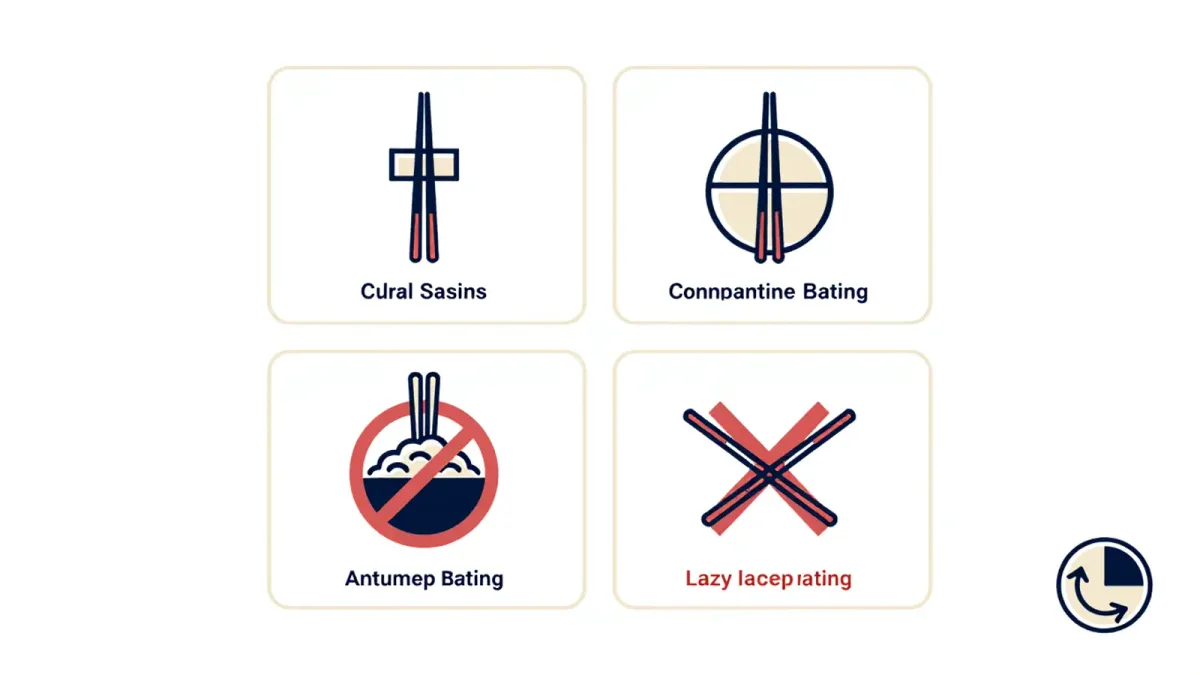
- Never stand them upright in rice. The upright arrangement resembles funeral incense; laying them across the bowl or on the rest is the correct pause.
- Never pass food chopstick to chopstick. In Japan this mirrors a funeral bone ritual. Set the food down on a small plate and let the other person pick it up.
- No pointing, no hovering. Gesturing with chopsticks, or holding them over the dishes while deciding, draws the eye uncomfortably.
- No rubbing cheap wooden sticks. Splinter-smoothing disposable chopsticks signals disdain for the restaurant — either accept them or not.
- Serving chopsticks exist. Where the table shares dishes, communal or flipped chopsticks serve the portion; the personal pair eats from the personal bowl.
How Do the Countries' Table Grammars Differ?
| Country | The core rule | What surprises visitors |
|---|---|---|
| Japan | Lift the rice bowl to the mouth; slurping noodles is accepted | Bowls are lifted — plates are not |
| China | Lazy Susan turns clockwise; serve yourself from it, never reach across | Tea etiquette: tap fingers to thank a pourer |
| Korea | Spoon for rice and soup, chopsticks for sides; bowls stay on the table | Metal chopsticks; elders eat first |
| Thailand | Fork pushes, spoon eats | Chopsticks are for noodles only |
| Vietnam | Chopsticks for noodles and bowls, herb plates shared | Dish of discarded bones and peels at each setting |
The deep pattern: chopstick cultures pair the sticks with a bowl-and-spoon logic, and the country differences are mostly about which vessel does the work (documented customs, July 2026).
What Is the Etiquette Around Pouring Drinks?
In China, Korea, and Japan, pouring for others — never only for oneself — is the table's social engine. The guest's glass is filled by the host or the table's senior member; the receiver holds the glass with both hands or supports it with the free hand as a courtesy, and returns the favor at the first chance. In Korea, turning the head slightly away from elders while drinking carries respect. Tea follows the same grammar: the pot belongs to whoever poured last, and refilling a neighbor's cup before one's own is the baseline move. The two-finger tap of thanks for a poured tea in Chinese contexts traces to a story of disguised royalty, and functions today as a quiet "thank you" when conversation prevents words.
How Should Shared Dishes Be Approached?
Communal eating is the default across most of Asia, and three mechanics prevent awkwardness. Take from the nearest side of a shared dish, not from its far face. Use the serving utensils where provided; where not, the flipped ends of chopsticks or the spoon do the serving. And pace to the table — dishes arrive together rather than in courses, so the meal's rhythm is set by the group, not the kitchen. Finishing everything is the safest compliment in Japan and Thailand; in China, a small remainder on shared plates historically signals abundance, though this custom is loosening in the cities.
What Should a Traveler Do When Unsure?
Watch, then follow — the universal answer that works in every dining culture on the continent. Servers and hosts expect unfamiliarity from travelers and correct gently; the mistakes that actually offend are rare, loud, and avoidable: the funeral arrangements, chopstick pointing, and drinking before the host's toast. Everything else is grammar that improves with one dinner's practice.
FAQ
Why is standing chopsticks upright in rice offensive?
The arrangement visually mirrors incense burned for the dead at funerals across East Asia. It is among the few table gestures with genuine weight; laying chopsticks across the bowl or rest is the correct pause.
Is slurping noodles really polite in Japan?
Accepted rather than required: slurping cools the noodles and signals enjoyment, and no one judges a quiet foreign visitor either way. In Korea and China, by contrast, slurping carries no particular meaning.
Do all Asian countries use chopsticks?
No. Thailand eats with fork and spoon — the spoon in the right hand — reserving chopsticks for noodle dishes; Indonesia, Malaysia, India, and the Philippines use spoon-and-fork or hands by tradition. Chopstick cultures map to East Asia and Vietnam.
How are metal chopsticks in Korea used differently?
They are flatter and slippery at first; the technique is the same. The meaningful Korean rules sit elsewhere: the spoon does rice and soup, bowls never lift from the table, and elders begin eating first.