Europe's coffee cultures share one plant and differ on almost everything else: what is ordered, in what size, sitting or standing, and for how long. The three anchors — Italy's fast espresso bar, Vienna's sit-down Kaffeehaus, and the Nordic fika table — define the spectrum, and most other cities fall between them (documented coffee-house traditions, February 2026). Learning each city's order vocabulary takes five minutes and changes the whole morning: the traveler who asks for a latte in Rome's old bars gets a glass of milk with a splash of coffee, and deserves it.
This site publishes information, not dining advice; prices and house habits vary by city and year.
How Does the Italian Espresso Bar Work?
The Italian bar is a standing affair measured in minutes: coffee at the counter costs a fraction of the same cup at a table, ordering happens first at the register in busier bars or directly at the counter in smaller ones, and the drink itself is built on precision doses — espresso, cappuccino (morning only, by local habit), macchiato, caffè latte in a glass, and the long black of the caffè americano for those who linger. The habits that read instantly: pay first or order first depending on the house, drink at the counter, and treat cappuccino after 11:00 as a tourist flag rather than a crime. Prices at the counter in major Italian cities typically run €1.20–€1.60 for a standard espresso, with table service adding a cover charge (posted bar prices, February 2026).
What Makes the Vienna Kaffeehaus Different?
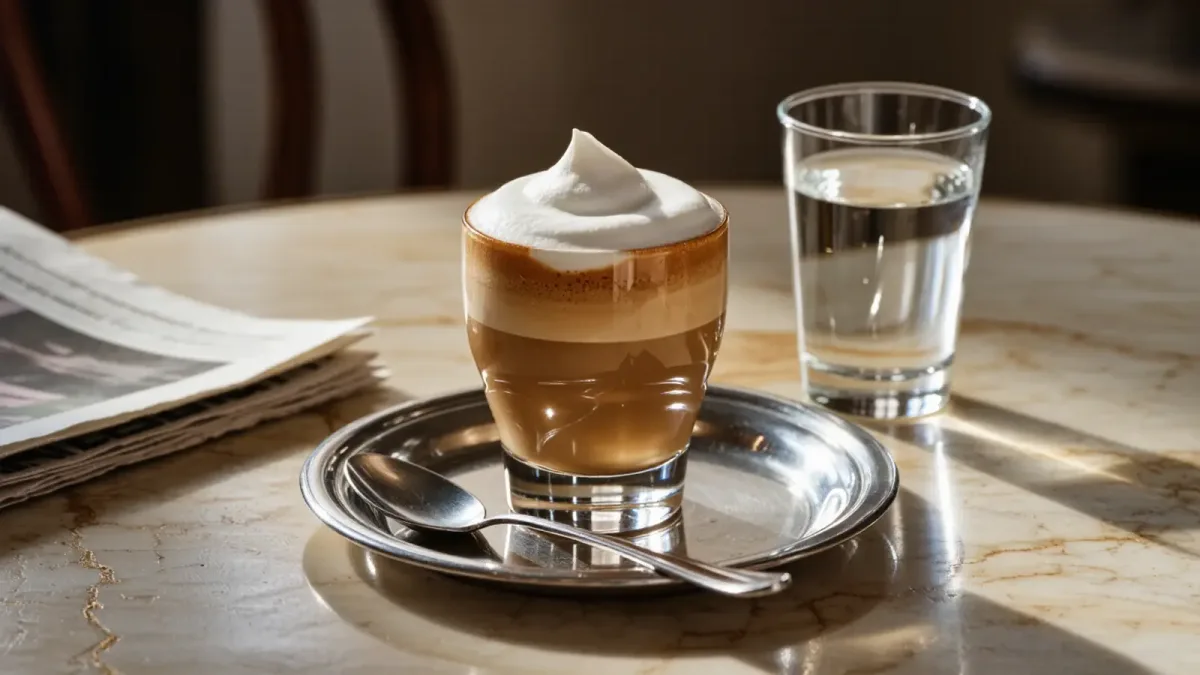
The Viennese coffee house is the opposite instrument: a room designed for staying. One order — a Kleiner Brauner, a Melange, an Einspänner in a glass with whipped cream — buys a marble table for the afternoon, with water served alongside, newspapers on wooden holders, and no expectation to order again. The Kaffeehaus earned UNESCO recognition for precisely this culture of the populated living room (inscribed on Austria's national inventory of intangible cultural heritage). The etiquette is minimal: take a free seat, order when approached, tip small and round. Time is the product; coffee is the pretext.
Where Does Fika Fit?
Swedish fika — the coffee break taken seriously, with a cinnamon bun or similar pastry — is both daily ritual and public institution. Stockholm's cafes build their business on it, filter coffee is the base drink rather than espresso, and refills are common. The Nordic cities generally run Europe's highest cafe prices alongside its highest consumption: expect €4–€6 for coffee and a bun in central Stockholm (posted cafe prices, February 2026). The fika habit's practical lesson for travelers: coffee is a scheduled pause, best taken sitting down, and bakeries double as cafes without any ceremony.
What About the Rest of Europe?
| City / country | Base order | House style |
|---|---|---|
| Paris | Un café, un crème | Terrace chair, people-watching, slow |
| Lisbon | Uma bica | Standing counter, quick, very short shot |
| Madrid | Café con leche | Bar counter, morning, with toast |
| Athens | Ellinikós or frappé | Slow, iced in summer, hours long |
| Istanbul | Türk kahvesi | Small cup, water on the side, unfiltered |
| London | Flat white | Specialty shops, takeaway-forward |
The Greek and Turkish traditions are the oldest European coffee cultures on this list — the thick, unfiltered brew served with water and, in Turkey, the fortune told in the grounds. Order it sweet, medium, or unsweetened at the moment of cooking, not after.
How Should a Traveler Order Coffee Anywhere?
- Learn the one-word local name for a black coffee and a milk coffee; every counter has both.
- Match the room to the intent: standing counter for speed and price, chair for the afternoon.
- Check whether payment happens at the register, the counter, or the table — it differs by city and by house.
- Round up small change as a tip in counter cultures; leave 5–10 percent at seated service in Central Europe.
FAQ
Why do Italians drink cappuccino only in the morning?
Milk-heavy coffee is treated as a breakfast drink; after the morning, locals switch to espresso. Ordering cappuccino after lunch marks a visitor, though no bar will refuse it — the habit is cultural, not a rule.
What is the difference between a Melange and a cappuccino?
In Vienna, a Melange is espresso with steamed milk and milk foam, similar to a cappuccino but served in the Kaffeehaus style, often in a larger cup. The names encode house style; the base recipe is the same family.
Are European cafes good places to work on a laptop?
Vienna's Kaffeehaus and the Nordic cafes welcome long sitters; Italian standing bars have no chairs to work at, and some city cafes restrict laptops at peak hours. Match the venue to the session length.
How much should coffee cost in European cities?
Standing counter espresso runs €1–€2 in Southern Europe; seated specialty coffee runs €3.50–€6 in Northern and Western Europe. Table service adds cover charges in Italy and terrace pricing in Paris (posted prices, February 2026).