Most of the world's breakfasts fall into three broad families: grain-and-drink breakfasts that sustain through a hot morning, savory-protein tables built for a long day's work, and light-sweet European mornings designed to postpone rather than deliver the day's main meal. Knowing which family a country belongs to answers the practical traveler question — eat at the hotel, at a counter, or skip and wait for lunch (breakfast customs as documented by national food culture references, February 2026). This guide maps the families, the signature dishes in each, and where the morning meal is worth building a day around.
This site publishes information, not dining advice; regional variation within countries is real and increasing in the cities.
Which Countries Eat Savory, and Which Eat Sweet?
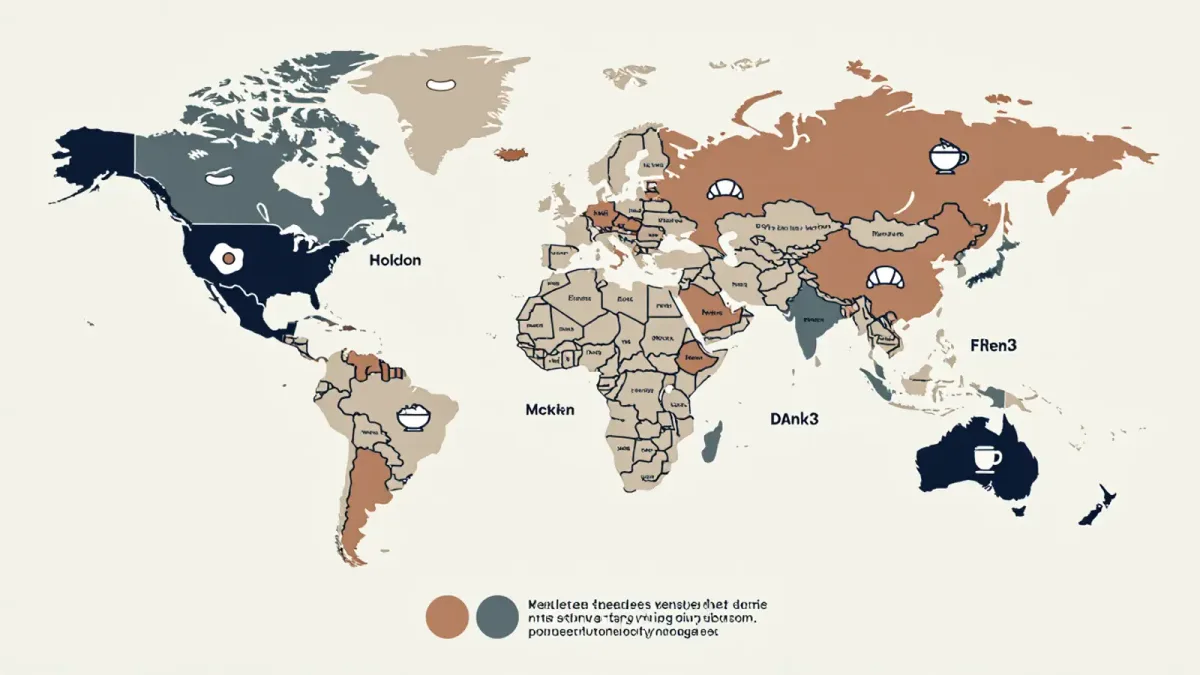
The savory belt runs through the Middle East, Turkey, the Levant, North Africa, and much of Asia: eggs, legumes, cheeses, flatbreads, pickles, and tea dominate. The light-sweet tradition holds in France, Italy, and Spain — pastry and coffee, sometimes with the firm conviction that nothing else belongs before noon. The full cooked breakfast — eggs, cured pork, breads, potatoes — belongs to the British Isles and, in variant forms, to Germany, Austria, Central Europe, and North America. Grain-and-broth breakfasts anchor East and Southeast Asia: congee, noodle soups, rice with accompaniments.
What Are the Signature Breakfasts to Seek Out?
| Country | Signature morning table | Where locals eat it |
|---|---|---|
| Turkey | Kahvaltı: cheeses, olives, honey, kaymak, eggs, endless tea | Breakfast houses, long and social |
| Japan | Rice, miso soup, grilled fish, pickles, tamagoyaki | Home; teishoku restaurants for travelers |
| Egypt | Ful medames, ta'ameya, eggs, bread, tea | Street counters from dawn |
| Israel | Dairy table: salads, cheeses, shakshuka, breads | Cafes and hotel dining rooms |
| Vietnam | Pho or banh mi with coffee | Street stalls, finished by 09:30 |
| Portugal | Meia de leite and a pastel, or tosta mista | Counter, standing, minutes long |
| Germany | Breads, cold cuts, cheese, boiled eggs | Home; bakeries on the run |
The pattern under the table: where breakfast is large and savory, it is social and worth an hour; where it is small and sweet, the cafe counter — not the table — is the experience (documented food-culture references, February 2026).
Why Do Breakfast Times Differ So Much?
Breakfast time tracks the workday and the climate. Street breakfast cultures — Cairo, Hanoi, Istanbul's busiest counters — peak between 06:00 and 09:00 and finish before offices fill. Southern European cafe culture stretches across the whole morning, and ordering a cappuccino at 11:30 in Milan is unremarkable. The full cooked breakfast keeps weekend hours, served to midday in Britain and Ireland. Travelers should note the closing rhythm: in much of Asia and the Middle East, the best breakfast stalls are finished before most hotel breakfasts open.
What Do People Drink With Breakfast?
Tea cultures and coffee cultures divide roughly along the savory-sweet line. Tea anchors the morning from Morocco (mint, sweet, small glasses) through Turkey (in tulip glasses, refilled constantly) to East Asia (green, light, unsweetened). Coffee rules Latin Europe, Latin America, and North America — short and standing at an Italian bar, long and milky in a French bowl, filtered and bottomless in North America. Coffee rules Latin Europe; where the habit is a coffee plus one pastry eaten standing, the transaction takes three minutes and costs a fraction of a seated cafe (documented customs, February 2026). India and Southeast Asia mix both: chai, milk tea, and sweetened coffee sit beside noodle and rice breakfasts.
How Should a Traveler Choose the Morning Meal?
- Follow the queues at 08:00. The line at a street counter is the only review that cannot be purchased.
- Match the country's family. In savory countries, eat the big meal at breakfast; in sweet-breakfast countries, save appetite for lunch.
- Use the hotel breakfast as insurance, not destination. In cities with strong morning street or counter cultures, the hotel buffet is the weaker meal — take it on the one morning the body demands familiarity.
- Mind the clock. Street breakfasts close early; a 09:30 arrival in Hanoi finds the pho stalls packing up.
FAQ
Why is breakfast so small in France, Italy, and Spain?
The light-sweet tradition treats breakfast as a pause, not a meal: the day's eating is weighted to lunch and dinner, and a pastry with coffee sustains to the midday table. Trying to find a cooked breakfast in these countries sends travelers to hotels, not to local cafes.
What is the biggest breakfast in the world?
The contenders for sheer scale are the Turkish kahvaltı spread and the full English or Irish; the Middle Eastern mezze breakfasts match both in range. All are designed for sharing, lingering, and a late lunch.
Is breakfast really the most important meal?
That framing is cultural rather than universal: several of the world's food cultures — much of Latin Europe and Southeast Asia — traditionally weight other meals more heavily. The traveler's useful version: eat the local morning habit at least once before judging it.
How can street breakfast be eaten safely?
The same rules as any street food: high turnover, food cooked in front of the customer, and queues of locals. A stall that empties and refills a pot hourly is safer than a hotel sideboard holding dishes warm for an hour.