For a city break of up to a week, a prepaid travel eSIM bought through an app before you fly is the best default for most itineraries: it activates on landing, costs a fraction of home-operator roaming for the same data, and needs no shop visit — with the physical local SIM still the better choice for trips longer than about two weeks or heavier than roughly 10 GB. The three options and their trade-offs are set out below, with prices and mechanics as listed in February 2026.
What exactly is a travel eSIM?
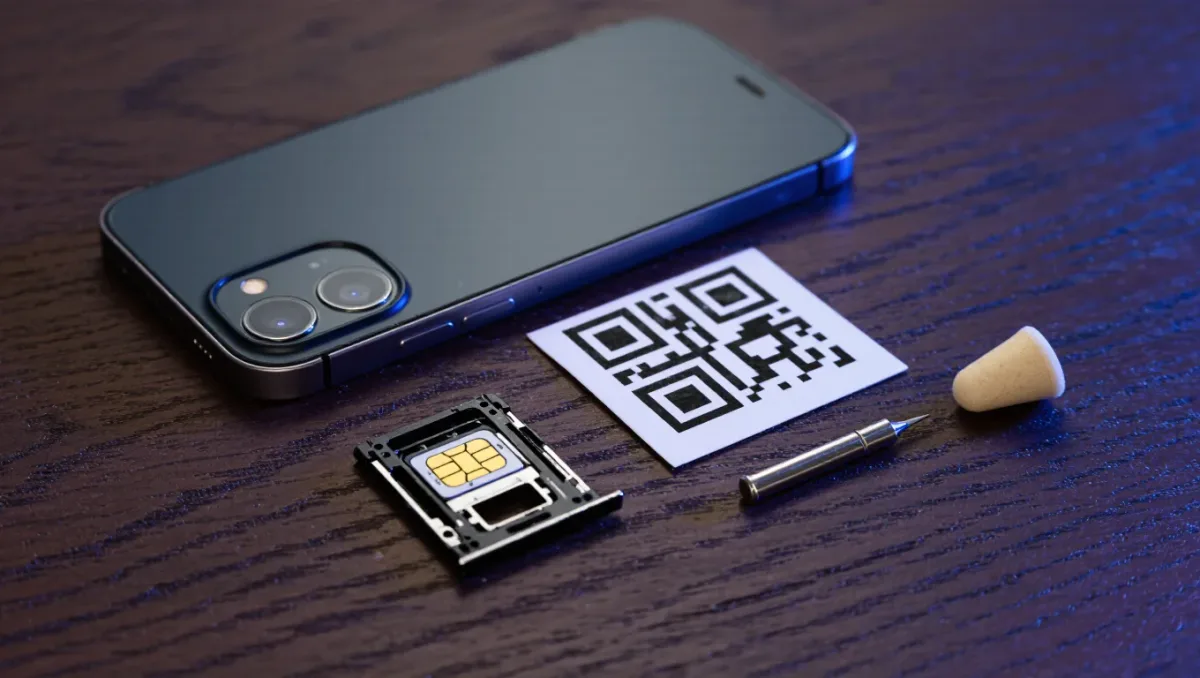
An eSIM is a carrier profile downloaded to a compatible phone — every mainstream model released since roughly 2020 supports one — that runs alongside your home SIM, so your usual number keeps receiving texts while the eSIM carries data. Travel eSIM resellers sell fixed data bundles (commonly 1, 3, 5, 10, or 20 GB) or regional bundles covering the EU or Asia as a bloc. Prices have fallen steeply: as of early 2026, a 5 GB European bundle from a major reseller typically lists in the $10–20 range, against home-operator roaming passes that often charge €8–10 per single day abroad. The bundle is valid for a set window — commonly 15 or 30 days from activation — which fits a city break with room to spare.
When is a physical local SIM still better?
Two cases. First, length: an operator-issued local prepaid SIM in, say, Japan or Mexico typically includes far more data per dollar at the 2–4 week mark than any travel eSIM bundle, and airport or station counters sell and install them in minutes. Second, identity: some countries require local registration tied to a passport, which an airport counter completes for you on the spot — a formality travel eSIMs handle differently, since they ride on the reseller's host network arrangements. The cost is the shop visit and, usually, a swapped SIM tray while traveling.
What about simply roaming on your home plan?
Roaming suits only the lightest users. Within the European Union, the "roam like at home" rule caps domestic-rate roaming for EU-issued plans, so a traveler on an EU SIM pays little extra; outside that zone, or for travelers from the US and elsewhere, daily roaming passes accumulate fast — a ten-day trip on an $10/day pass outpaces any eSIM bundle several times over. Roaming's real advantage is zero setup and the reliability of your home network's partner arrangements, which is why it remains the sensible fallback if a trip is short, subsidized, or covered by an existing plan.
How much data does a city break actually use?
Less than the bundle menu suggests, if you plan around Wi-Fi. A realistic heavy day of urban use — maps navigating on foot for a few hours, transit apps checking departures, messages and photo backups on hotel Wi-Fi, and some mobile browsing — lands in the 300–700 MB range per day as of 2026 device measurements. Three to five days therefore fits comfortably inside 2–3 GB, and a 5 GB bundle covers a week of deliberately heavy use including music streaming on the metro. The data hogs are video and automatic cloud photo backup over cellular; both are one-toggle fixes in settings. Hotspot use is the genuine multiplier — sharing a laptop or a companion's phone can triple consumption — so if the trip involves work, price the 10–20 GB tier rather than rationing. Most resellers top up the same eSIM without reinstalling, so undershooting costs only a top-up, not a second profile.
How do you set it up so it just works on landing?
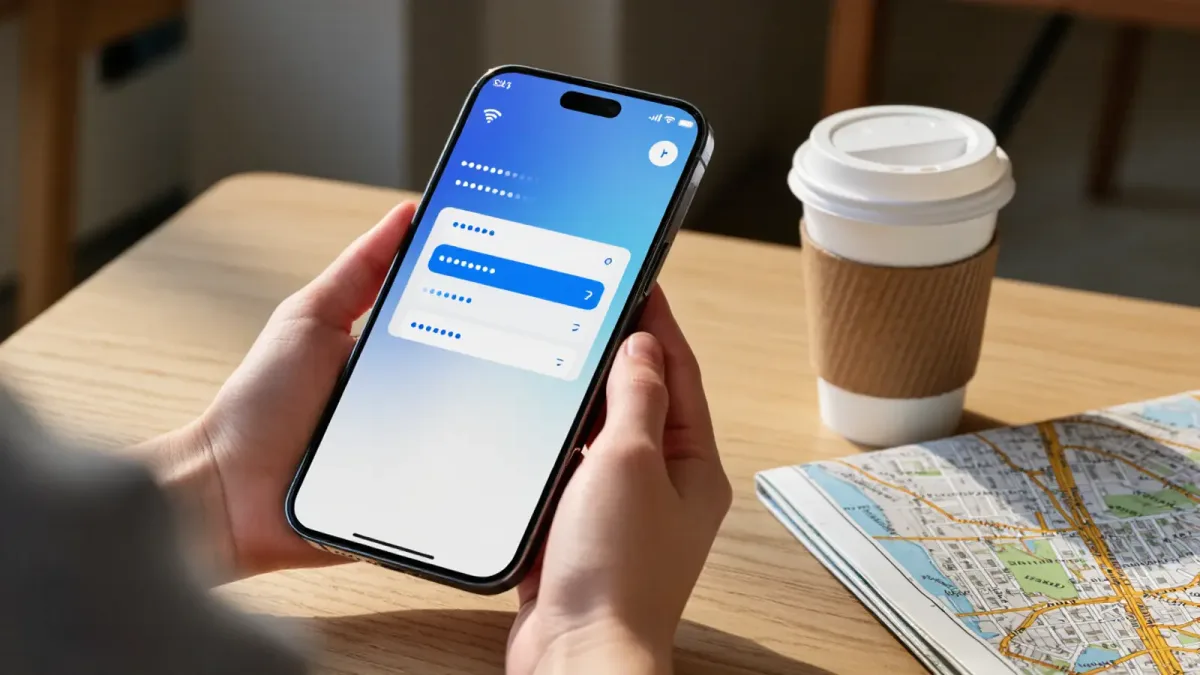
Do the whole procedure before the flight. Install the eSIM app or profile at home on Wi-Fi; most resellers let you buy now and activate later, with the data window starting only when the eSIM connects to a supported foreign network. On landing, turn on the eSIM line, set it as the data line, and enable data roaming on that line only — the standard toggle that host networks require of inbound eSIMs. Two practical checks: confirm your phone is carrier-unlocked before buying anything, and download offline maps of your destination as a backup, since no plan survives every basement restaurant and metro tunnel.