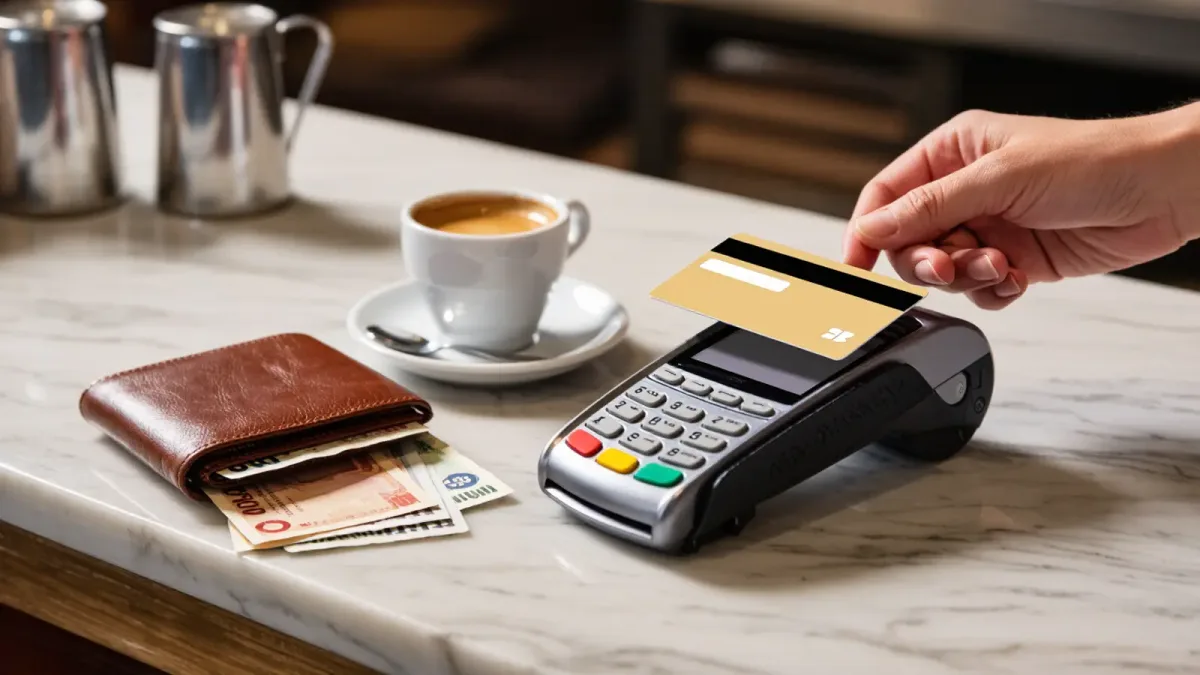
The working setup for a three-day city break is one fee-free travel card for nearly everything, a second card from a different network as backup, and a small cash float — the equivalent of €50–100 — drawn from bank-owned ATMs on arrival, a combination that covers both the cashless Scandinavian cities and the still-cash-minded markets of southern Europe, per published card-usage patterns and operator fee schedules as of April 2026.
Which card should you travel with?
The card that charges nothing to use abroad, which usually means one of the fee-free travel cards offered by digital banks and several traditional issuers: no foreign-transaction fee (the 1–3% surcharge many standard cards add to every foreign purchase) and a fair exchange rate close to the interbank mid-rate. The travel-industry standard reference is Visa's and Mastercard's own daily network rates, which the best cards pass through without margin. The second card is not a duplicate: a different network (Visa plus Mastercard) and a different issuer means a lost, frozen, or simply rejected card does not end the trip. Credit for larger purchases, debit for cash — the split matters, since debit-card fraud touches the account it drains.
How do you use an ATM abroad without paying twice?
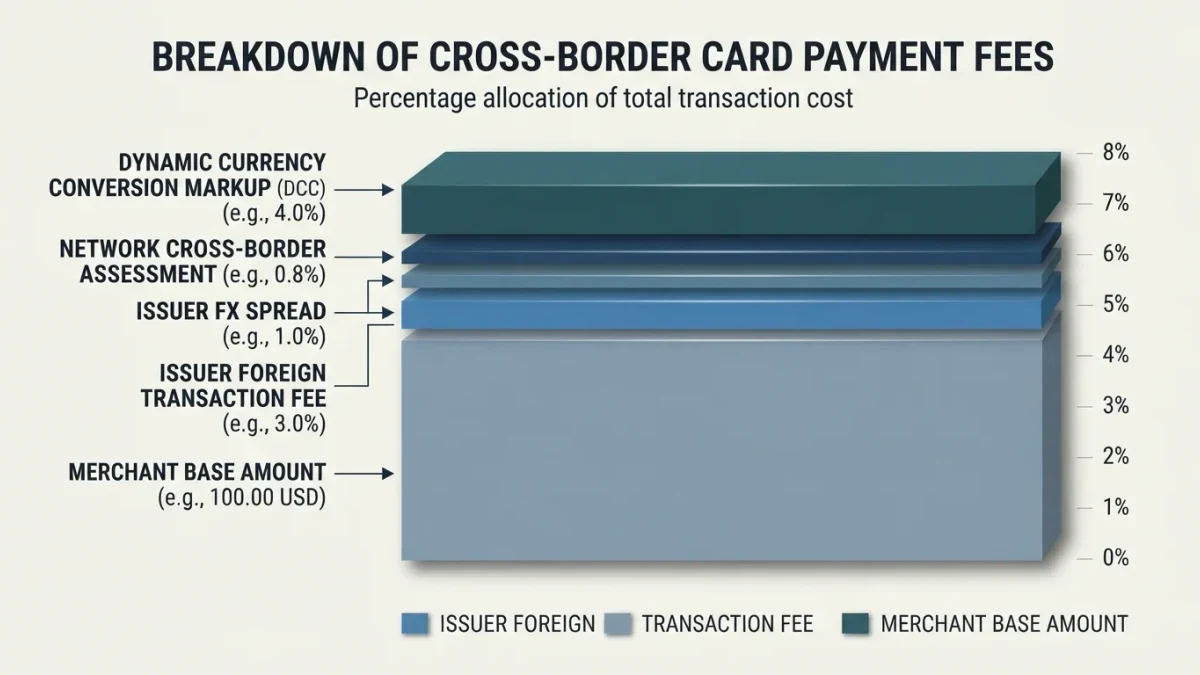
Two fees stack at foreign ATMs: your own bank's out-of-network and foreign-transaction charges, and the local operator's surcharge. Avoiding the stack is mechanical. Use ATMs attached to actual banks, not the standalone machines in tourist strips — the bank-owned ones typically add no operator surcharge in most of Europe as of 2026. Decline the machine's offer to charge you in your home currency — the conversion option called dynamic currency conversion, or DCC, which typically costs 5–12% against the network rate and is presented as a friendly convenience screen; always choose to be charged in the local currency. And withdraw once, in a larger amount, rather than in small frequent sums, since fixed fees punish frequency.
How much cash does a city break actually need?
Less every year, but not zero. In the Nordic countries and the Netherlands, cards and phone payments cover virtually everything, and a cash float of €30 sits untouched. In Italy, Portugal, Greece, and across much of Central Europe, small cafes, market stalls, family restaurants, and rural buses still run substantially on cash — the realistic float there is €50–100 for a three-day trip. Japan sits between: cards are accepted broadly in cities, but the cash-in-hand culture persists at small restaurants and shrines, and 7-Eleven and Japan Post ATMs reliably accept foreign cards as of 2026. Mexico and Southeast Asia lean cash-heavier still. The pattern for the traveler: the day's cash need is set by the morning's first two stops, so carry a day's worth, keep the rest in the room safe, and refill from a bank ATM once mid-trip if needed.
The arrival sequence is the practical core, so it deserves its own paragraph. Draw the trip cash float at the airport bank-branch ATM or, failing that, the first bank ATM in the city center — not from exchange bureaus, whose display rates embed margins that dwarf any ATM fee; bureaus exist for the leftover-banknote problem at departure, not for buying cash. Set the phone wallet up before the flight too: contactless phone payments route on the same card terms with better token security, and in the most card-saturated cities they are the only wallet the trip needs. One last mechanical note: keep the small banknotes separate from the large ones, because the cash countries respond to a large-note request for a 2-euro espresso exactly as a local would — with a sigh and a trip to the register for change.
What are the small habits that save money?
Four, all mechanical. Pay in local currency at card terminals too, not just ATMs — the same DCC trick appears on card machines as a currency choice. Check that the amount matches the menu price before tapping; card-not-present style surcharges have crept into some tourist districts. Let your bank know nothing — travel notifications are obsolete at most issuers, but do verify your card works abroad and note the 24-hour phone number on the back before leaving. And settle a group dinner with one card rather than five, because the split-payment friction at a foreign table is a fee and a delay with no upside.