A quiet hotel room is found before you book, not after you check in. The method is simple: study the map for traffic corridors, look at the street with imagery tools, work out which side of the building your room would face, and read reviews for specific noise signals. Ten minutes of this research separates a restful night from a night of delivery trucks.
The payoff is real. In plain terms, a quiet room is one that makes very little noise, and the word itself carries that meaning; Cambridge Dictionary defines "quiet" as making very little noise, which is exactly the standard a hotel room should meet. What follows is how to get there from your laptop, before any money changes hands.
This guide sits alongside our broader hotels coverage, and it pairs naturally with Floor, Noise, Light: How to Choose the Actual Room Within the Hotel, which covers what to ask for once you are at the desk. Here, the work happens earlier: choosing the right block, and the right side of it. This connects to our earlier piece, Floor, Noise, Light: How to Choose the Actual Room Within the Hotel.
What does the map tell you about noise?
Open a map before you open a booking site. Noise follows roads, and not all roads are equal. A hotel on a boulevard with bus lanes sits beside constant movement. A hotel one street back, on a block of residences and small offices, usually sits beside far less. Trace the routes that matter: arterial roads, tram and rail lines, ring roads, and the approach paths to airports. None of this requires a decibel reading. It requires noticing what moves, and when.
Look for the things that move at the hours you will be sleeping. Night buses and freight routes keep corridors alive after midnight. A hospital or a late-opening district brings sirens and foot traffic. A market square is charming at noon and loud at closing time. Conversely, a park helps: green space on one side of a hotel means no building, no traffic, and no neighbours on that side. A riverfront or a courtyard-facing block can do the same work.
Also check what is directly attached. A hotel built above a bar, a club, or a busy restaurant inherits its neighbours' hours. On the map, zoom close enough to see the buildings on the same block. If the hotel shares a wall with something that trades late, treat that as a strike against it unless reviews say otherwise.
How do you read street imagery for noise?
Imagery tools let you stand on the pavement without flying there. Look up and down the street in front of the hotel. Wide multi-lane roads with barriers suggest heavy, fast traffic. Narrow streets with parked cars, trees, and low buildings suggest slower movement and some natural buffering. Check whether the hotel's entrance sits on the main road or tucked onto a side street; many properties face the quiet side by design.
Look at the buildings opposite and beside. Glass-faced offices, entertainment venues, and construction sites all generate sound, and construction sites generate it early. A crane visible in imagery is a useful warning. Also note whether the street has nightlife infrastructure: awnings, terrace seating, queues outside doors. Terrace seating means conversation on the pavement until late.
One caution: imagery can be years old. Treat it as evidence about the street's shape, not its current tenants. A shuttered venue can reopen. Combine what you see with what recent reviews say, and you have a fair picture.
Which side of the hotel should your room face?
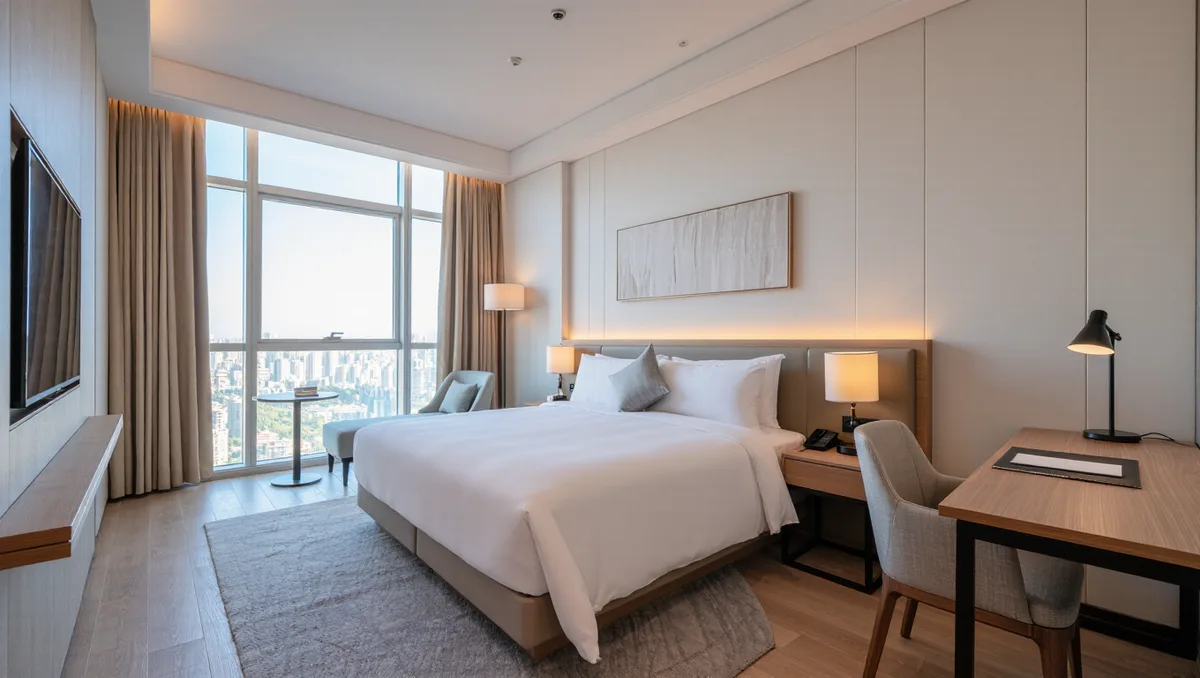
Once the block passes the map test, the next question is which side of the building you would occupy. Hotels are not uniformly quiet inside. A room facing the street hears the street. A room facing an interior courtyard, a garden, or a neighbouring roof usually hears much less. Many booking sites list room views; "courtyard view" and "city view" are not interchangeable when it comes to sound.
Higher floors help in a specific way: they lift you above street-level conversation, idling engines, and late-night pavements. But height is not a complete shield. A room on the eighth floor facing a six-lane road still hears the road, and an upper floor beside a rooftop bar inherits the bar. Direction matters more than altitude.
Consider the internal geography too. Rooms beside elevators, ice machines, housekeeping cupboards, and breakfast rooms hear their own traffic, especially early in the morning. Rooms near event spaces hear events. If the hotel's website or floor plans show where these sit, pick the far end of a corridor. If they do not, this is a fair question for the hotel directly, and most front desks answer it plainly.
What do reviews actually say about noise?
Reviews are the richest source, if you read them as signals rather than scores. Search the review text for specific words: "street noise", "thin walls", "could hear the bar", "quiet at night", "slept well". Specific complaints are more informative than general ones, because they name a source you can verify on the map. "Noisy on Fridays" tells you about a nearby venue's schedule. "Traffic noise all night" confirms what the road layout already suggested.
Weight recent reviews most heavily. A hotel that replaced its windows two years ago will not sound like its older reviews. Also read the responses: a property that answers noise complaints with "we can move you to a courtyard room next time" is telling you both that the problem exists and that a remedy exists. That is useful, actionable information.
Beware overcorrection. A single furious review about one night's wedding party is not a pattern. Look for repetition across several months. And remember that reviewers differ: some are light sleepers, some book the cheapest room and land above the entrance. The signal is in the cluster, not the outlier.
Practical steps: a booking-time checklist
Here is the sequence in one place, as our analysis of how noise complaints arise suggests it should run:
- Map the hotel. Note arterial roads, transit lines, nightlife blocks, and any green space or water on one side.
- Walk the street in imagery. Check lanes, trees, opposite buildings, and any construction.
- Identify the quiet side. Prefer courtyard, garden, or rear-facing rooms; note the room category that secures one.
- Search reviews for noise words. Read the recent cluster, and note any pattern in the hotel's replies.
- Message the hotel. Ask directly for a room away from the street and away from the elevator. Confirm in writing if the answer matters to you.
Two refinements are worth the extra step. First, a guaranteed room type beats a request: if quiet is essential, book the category that specifies the courtyard or garden side, since a verbal request can be refused at check-in. Second, timing shapes noise as much as location does. A room on a lively street is a different experience on a Tuesday than a Saturday, and city-wide events can turn any district loud. If your dates are fixed around a festival or holiday, expect the map to understate what you will hear.
None of this requires accepting a worse location. It requires matching the location to the room. A hotel on a busy boulevard can still offer a genuinely quiet stay if its rear rooms face a courtyard, and a hotel on a sleepy street can still disappoint if its rooms share walls with a late-trading bar. The block, the side, and the reviews together give you the answer.
What this means for your next city break
Sleep is part of what you are paying for, and it is the part most easily lost. The research above takes minutes, costs nothing, and travels well: the same map-and-imagery routine works in any city, on any continent. Build it into your booking habit, alongside the other checks that happen before payment, such as how US hotel bookings must now show the full price upfront, resort fees included, so the total you compare is the total you pay. Readers following this should also see US Hotel Bookings Must Now Show the Full Price Upfront, Resort Fees Included.
What the evidence here establishes is a reliable method, not a guarantee. Streets change, venues reopen, and no review set covers every room in a building. What remains unknown is always the specific room behind a specific door on a specific night. The checklist narrows the odds sharply, and a short, polite request at check-in closes most of the remaining gap. Between the two, most travelers can find quiet hotel rooms without ever hearing a delivery truck at three in the morning.