
Floor, Noise, Light: How to Choose the Actual Room Within the Hotel
Booking the hotel is half the task; the room number decides sleep quality, and four requests — floor, corner, courtyard, away from the elevator — cover most of it.
Hotel coverage organized by location: which district suits which kind of trip, walking and transit times to the places on your list, street noise, room size, breakfast, seasonal nightly rates and luggage storage on checkout day. For travelers who treat the address as a hotel's most important feature.
Where to stay in a city.
Booking the hotel is half the task; the room number decides sleep quality, and four requests — floor, corner, courtyard, away from the elevator — cover most of it.

A "view" on a booking page is usually an unregulated descriptive term — what the traveler actually receives depends on the room category code, the floor, and the building across the street.

A hotel two metro stops farther out commonly lists 20 to 40 percent below the same standard in the core — but only if the stop is on the right line and the neighborhood runs late.
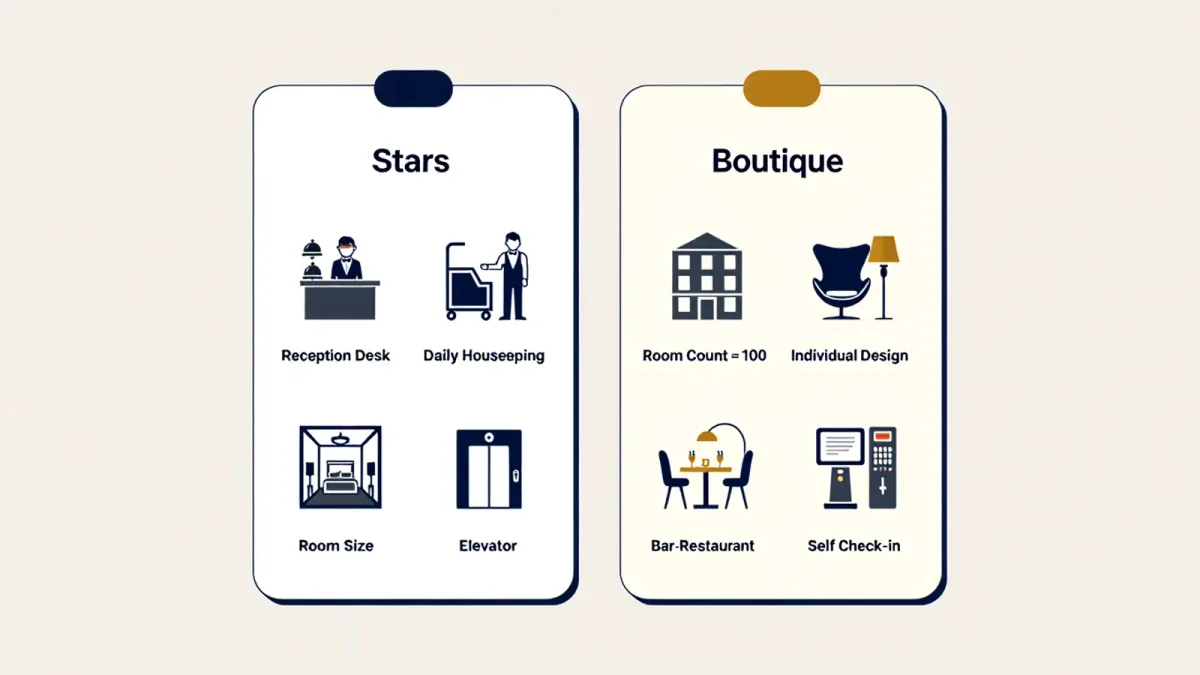
Star ratings measure facilities and service standards, while boutique properties trade uniformity for character — the right choice depends on which failures a traveler can tolerate.

For stays of two nights or fewer a hotel usually wins on location and logistics; for three nights or more, or for groups, an apartment often costs less per person.