Bairro Alto and Príncipe Real are two sides of the same Lisbon hill: Bairro Alto is the grid of narrow 16th-century streets that becomes the city's nightlife quarter after dark, while Príncipe Real, one slope north, is its quiet residential counterweight of gardens, concept shops, and mansions — and the pair, visited as Príncipe Real by day and Bairro Alto by evening, make the best single afternoon-to-night plan in the city. The districts sit above the Baixa and west of the Chiado, linked by the Elevador da Glória funicular from Restauradores. This primer covers layout, character, and practicalities; selections are chosen for walkability, variety, and price range as listed in February 2026.
This site publishes information, not professional travel advice; hours and prices change, so confirm before you go.
What is Bairro Alto?
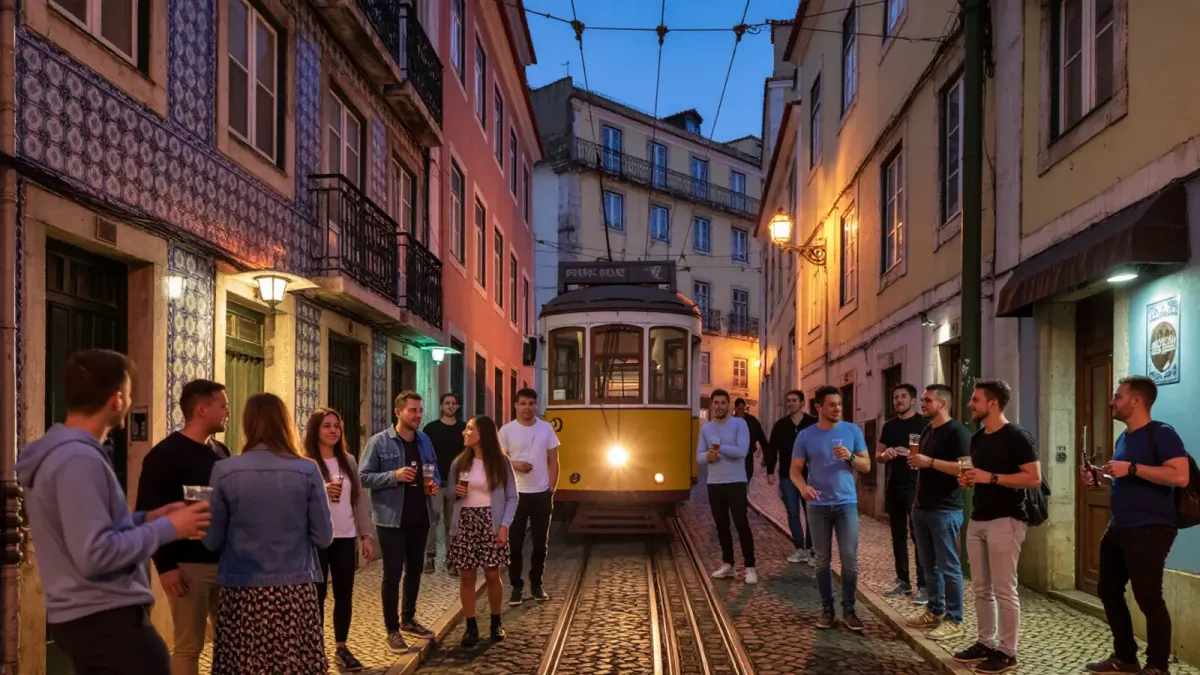
Bairro Alto — "the high neighborhood" — was Lisbon's first planned district outside the medieval walls, laid out on a rough grid in the early 1500s. Small houses, narrow lanes, and a hilltop position kept rents modest for centuries, which drew printers, the city's bohemian quarters, and eventually the densest concentration of bars in central Lisbon. By day it is a quiet tangle of fado houses, small groceries, and tiled facades with almost no traffic; by night, particularly Thursday to Saturday from around 22:00, the same lanes carry the city's bar crowd until 02:00 and later, since the district's traditional licensing allows late hours. The dual character is the point: the emptiest afternoon streets in central Lisbon and its fullest night lanes are the same few blocks.
How big is Bairro Alto?
The district is smaller than visitors expect — roughly a dozen lanes between the São Pedro de Alcântara viewpoint and the Rua da Rosa drop toward the river, a grid you can walk end to end in ten minutes. That scale is why one evening suffices and why the district empties so completely by day. It also explains the street-level economy: with small lots and no room for chains, the storefronts stay individually owned, which is what keeps the district's character intact against the commercial pressures visible downhill in the Baixa. As of 2026, the municipal plan still restricts through traffic in most of the grid, so the lanes belong to pedestrians at any hour.
What is Príncipe Real?
Príncipe Real — named for the 19th-century royal heir — developed a century after Bairro Alto as an elegant residential quarter on gentler slopes, and its layout shows it: wider streets, plane trees, and the district's centerpiece, the Jardim do Príncipe Real, an octagonal lakeside garden. As of 2026 the quarter's draw is its mid-scale independence: the Embaixada concept store occupies the neo-Moorish Palácio Ribeira da Cunha with design and fashion ateliers on its galleries; the Mercado da Ribeira's successor food halls are a short walk downhill at Cais do Sodré, while Príncipe Real's own small market hall serves the residential trade; and the Museu da História Natural sits beside the botanic garden on the district's eastern edge. Prices run above Bairro Alto's street level but below the Chiado's.
How should you spend the day across the two?
- Afternoon in Príncipe Real. Enter by the Elevador da Glória or the 28 tram's western stretch, work around the garden, then browse Embaixada and the surrounding shops; the Miradouro de São Pedro de Alcântara, at the district's southern edge, is the best terrace view over the Baixa and the castle.
- Sunset crossing into Bairro Alto. The two districts meet at the Bairro Alto Hotel corner and the Calçada do Combro ridge; cross at golden hour when the day crowd gives way to the night crowd.
- Evening in Bairro Alto. Fado houses in the western lanes take dinner seatings; bars elsewhere open from around 20:00 and fill from 22:00. Pick one lane and stay local — the district is best read one street at a time.
The two districts are easiest to plan as a contrast table:
| Bairro Alto | Príncipe Real | |
|---|---|---|
| Best hours | 22:00–02:00, Thu–Sat | 11:00–19:00 |
| Character | 16th-century grid, bars, fado | 19th-century gardens, mansions, shops |
| Noise | Loud on weekend nights | Residential and quiet |
| Budget register | Street prices, cash bars | Mid-range boutiques and cafés |
Fado deserves one practical line: the district's western lanes around Travessa do Falcão and Rua do Norte hold several fado houses with dinner seatings, and the respectful format — a dim room, a first set listened to in silence — differs from the tourist-focused shows of Alfama and the Chiado. As of February 2026, most houses ask for reservations by phone a day ahead on weekends, with dinner-and-show seatings commonly in the €40–70 range per person, and drinks-only seats at the bar.
What should you know before going?
The terrain is the practical story: both districts are steep, and the cobbled calçada is slippery when wet, so shoes matter more than usual. The Glória funicular and the 28 tram connect the hill to the Baixa and Graça respectively, and as of 2026 both accept contactless card boarding on board networks — though the 28 tram remains crowded at midday. Residents' associations have pressed the city for years over night noise in Bairro Alto; the tourist office's guidance treats the district as a nightlife quarter in its own right, so sleep elsewhere and visit after dark rather than booking a room inside it.