Seongsu-dong is Seoul's workshop-turned-neighborhood: a former shoe-manufacturing district on the Han's south bank, now the city's densest concentration of independent coffee roasters, flagship brand cafes, and maker studios, best covered on a weekday afternoon and one weekend morning, all within a 20-minute walk of Seongsu Station. The district sits east of Gangnam's core and north of the Ttukseom river park; its conversion followed the factory exodus of the 2000s, when young designers and roasters took over the small-brick workshop buildings, and by 2026 the mix is established enough that the district carries nicknames like "the Brooklyn of Seoul" — a label locals find amusing and roughly accurate in texture. This primer covers layout, character, and practicalities; selections are chosen for walkability, variety, and price range as listed in June 2026.
This site publishes information, not professional travel advice; hours and prices change, so confirm before you go.
How is the district laid out?
The walkable core is the grid between Seongsu Station (line 2) and the Han, bisected by the elevated Seongsu-daero road and its underground pair. The lanes of interest run perpendicular to the main road: Yeonmujang-gil, the old factory street where the first cafes and studios took over workshop buildings, and the quieter blocks north of it toward the river park. Three zones register: the station-front blocks, busy and commercial; the middle lanes around Yeonmujang-gil, where the handcraft and coffee economy lives; and the river edge, where Ttukseom Seoul Forest — the massive park the city opened in stages from 2004 — supplies the green counterweight. Everything in this primer sits within that triangle.
What should you see in a half-day?
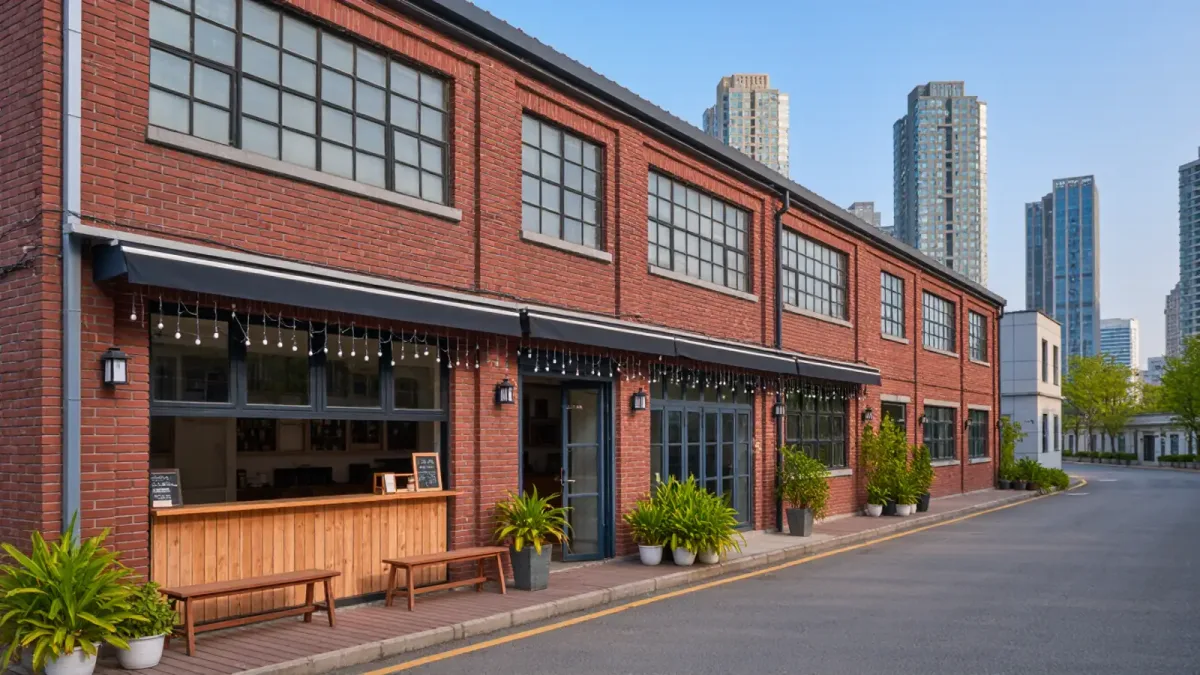
- Yeonmujang-gil and the cafe blocks. The district's signature is scale-by-conversion: two-story brick workshops now hold roasteries, bakeries, and single-brand flagship stores — sneakers, ceramics, leather — each filling one former factory floor. Coffee runs 6,000–9,000 won per cup at the leading roasteries as of June 2026, and queues on weekend afternoons are genuine.
- Seoul Forest. The park's southern entrance is a 15-minute walk from the station grid: deer enclosures, sculpture lawns, and butterfly garden, free entry, and the district's best picnic supply run ends here.
- The handcraft lanes. Off Yeonmujang-gil's side streets, small studios sell leatherwork, candles, ceramics, and watch parts, several with same-day workshops booked on-site — the district's one activity category worth reserving an hour for.
- The river path. The Han riverside cycle path passes the district's northern edge; evening brings the bridge-light views that photograph best from Ttukseom station's side of the river.
How does Seongsu fit a Seoul city break?
As the modern half-day in a historic-center itinerary. A first Seoul break rightly spends its days on the Jongno side — palaces, Bukchon, Insadong — and Seongsu supplies the contemporary register: the design shops, the coffee, and the river, all one line-2 ride from the Gangnam stations and about 25 minutes from Euljiro as of 2026. It pairs naturally with the Dongdaemun Design Plaza en route. Its honest caveat is crowd timing: the district's weekend afternoon queue culture is real, and the weekday visit — when factory floors read as workshops again rather than photo sets — is the version worth the metro ride.
A note on the district's economics explains its rhythm. The conversion wave that began in the 2010s priced quickly: once a roastery or brand proved the model, rents along Yeonmujang-gil rose steeply, and the district now runs on turnover — units that were candle studios two years ago are bagel counters today, as any side-by-side of old visitors' photos confirms. The practical read for a traveler: treat specific shop recommendations as perishable and the district-level pattern as durable. The conversion is city-sanctioned — Seoul's urban-regeneration programs supported the factory-to-studio reuse — and as of 2026 the garages and hardware stores that remain between the flagships are not leftovers but the district's other half, the working Seongsu that the workshops once served.
When should you go, and what should you know?
Weekday afternoons from 13:00, when the bakeries finish their second bakes and the lanes thin out. Spring and autumn are the park's seasons; summer moves the crowd indoors to the air-conditioned flagships. Cards and transit apps cover everything — cash is rarely needed — and the district's sidewalks are flat, wide, and step-free by Seoul's generally high standard, which makes it one of the easiest districts in the city to cover at speed.