Coyoacán is Mexico City's village quarter: a low colonial grid of two adjoining plazas, volcano-stone churches, and jacaranda-shaded lanes in the city's south, best visited on a weekday morning before the weekend crowds, and covered comfortably in a half-day that includes the Frida Kahlo Museum and the market. The name means "place of coyotes" in Nahuatl, and the carved stone coyote fountain in the main plaza is the district's mascot. Cortés made the village his base during the conquest of Tenochtitlan in 1521 — the district predates most of what visitors think of as Mexico City — and its village scale survived the megacity growing around it. This primer covers layout, character, and practicalities; selections are chosen for walkability, variety, and price range as listed in May 2026.
This site publishes information, not professional travel advice; hours and prices change, so confirm before you go.
How is the district laid out?
The core is two squares side by side. The Jardín Centenario holds the coyote fountain and the district's cafés; across the street, the Jardín Hidalgo fronts the 16th-century Parroquia de San Juan Bautista, the monastery church that anchors the quarter. Everything else radiates within ten minutes' walk: the Mercado de Coyoacán two blocks south, the Frida Kahlo Museum and the Casa Azul's blue walls four blocks west on Londres street, the smaller Mercado de Antojitos beside it, and the tree-lined Francisco Sosa avenue, said to be among the oldest streets in the Americas, running southeast toward the National University's UNESCO-listed campus. The district is flat, cobblestoned, and compact — roughly a kilometer square covers everything in this primer.
What should you see in a half-day?
- The Frida Kahlo Museum. The painter's lifelong home, the Casa Azul, holds her studio and collections and is Mexico City's most-visited single museum; it manages demand strictly with timed tickets sold online well ahead — as of May 2026, same-weekend slots routinely sell out, so this is the one booking that shapes the day's schedule.
- The plazas and the church. The twin gardens cost nothing, and morning is their hour: coffee at a plaza terrace, the market's fruit stands, the church's sober stone interior.
- Mercado de Coyoacán. The working market hall for produce, flowers, and lunch counters — a more local register than the tourist-facing antojitos market beside it.
- Francisco Sosa. The colonial avenue of mansions and galleries running toward Ciudad Universitaria, where the university's 1950s modernist campus — murals included — extends the day for architecture-minded visitors.
Three eating registers make the half-day easy to plan. The plaza terraces around Jardín Centenario serve the breakfast-and-coffee hour, with sidewalk tables under the jacarandas from about 08:00. The Mercado de Antojitos beside it is the tostada-and-tlacoyo hall — counter seating, cooked-to-order antojitos, and prices in the tens of pesos rather than the hundreds, though it quiets by late afternoon as of 2026 practice. And the Mercado de Coyoacán proper, two blocks south, covers the serious shopping and the lunch counters locals actually use; its years of pandemic-era reconstruction ended with the hall reopened and trading, so the market's full footprint is back in service. Between the three, no meal in the district needs a reservation — a rarity in this city and part of the quarter's working-day charm.
How does Coyoacán fit a Mexico City break?
As the slow half-day. Mexico City's break format is intense — the Centro Histórico, Chapultepec, and Roma-Condesa each consume a day — and Coyoacán is where the trip breathes: flat, green, and priced below the center, with plaza coffee at a fraction of Roma's café rates. The logistics are simple as of 2026: the Tren Ligero from Tasqueña stops at the district's edge, ride-hail services cover the area densely, and the combined Museo Casa Azul plus plaza-morning plan fits any three-day itinerary. Its qualifier is distance: at roughly an hour's transit from the Zócalo in traffic, Coyoacán rewards a dedicated morning rather than a squeezed afternoon.
When should you go?
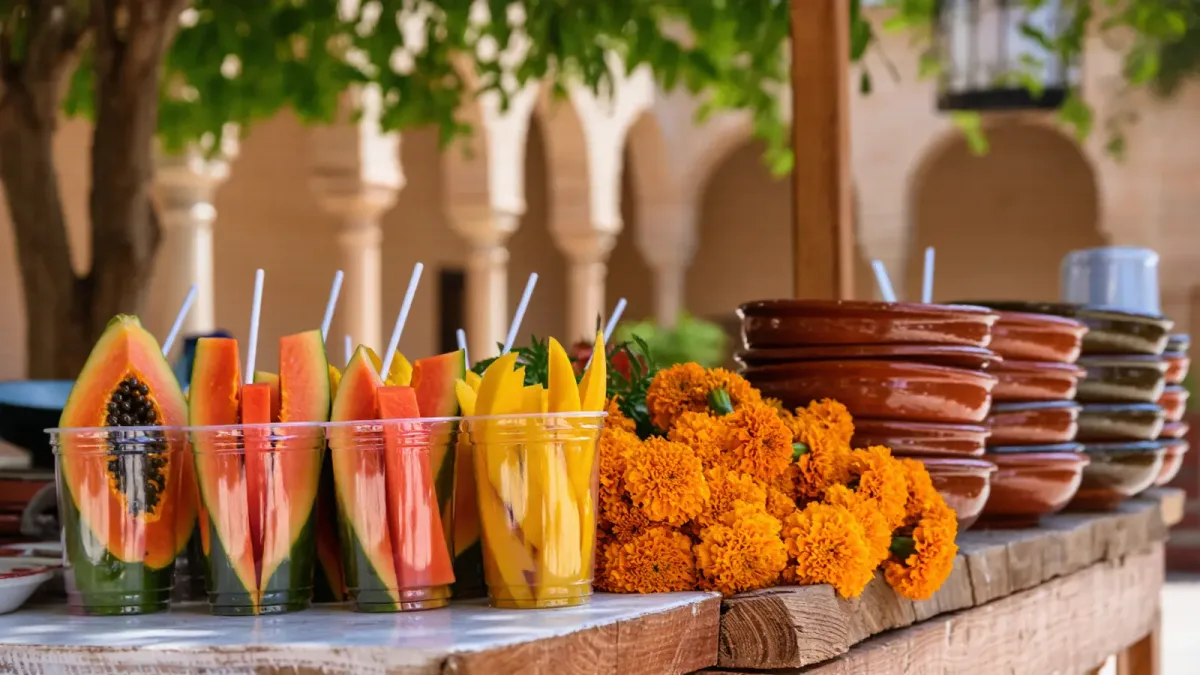
Weekday mornings are the village at its own pace; Saturdays bring the heaviest crowds — the plazas host puppeteers, craft stalls, and half of the capital — and Sundays fill with family day-trippers after church. The jacaranda bloom in late March and April, when the district's avenues turn violet, is the calendar's single best window, and the Day of the Dead season in late October and early November, when the plazas fill ofrendas and cempasúchil, is its most photographed.