Gràcia is the neighborhood Barcelona-break travelers mean when they say "the village": a former independent town annexed by the city in 1897, its irregular lanes and small squares left intact where the Eixample grid ends, best experienced on weekday mornings around its plaças and on any evening when the terraces fill — with the caveat that August brings the Festa Major de Gràcia and a week when the district belongs to its decorated streets. The quarter climbs the foothills between the Eixample and the Collserola park, and everything of interest sits within 15 minutes' walk of the Fontana or Joanic métro stops. This primer covers layout, character, and practicalities; selections are chosen for walkability, variety, and price range as listed in March 2026.
This site publishes information, not professional travel advice; hours and dates change, so confirm before you go.
What makes Gràcia different?
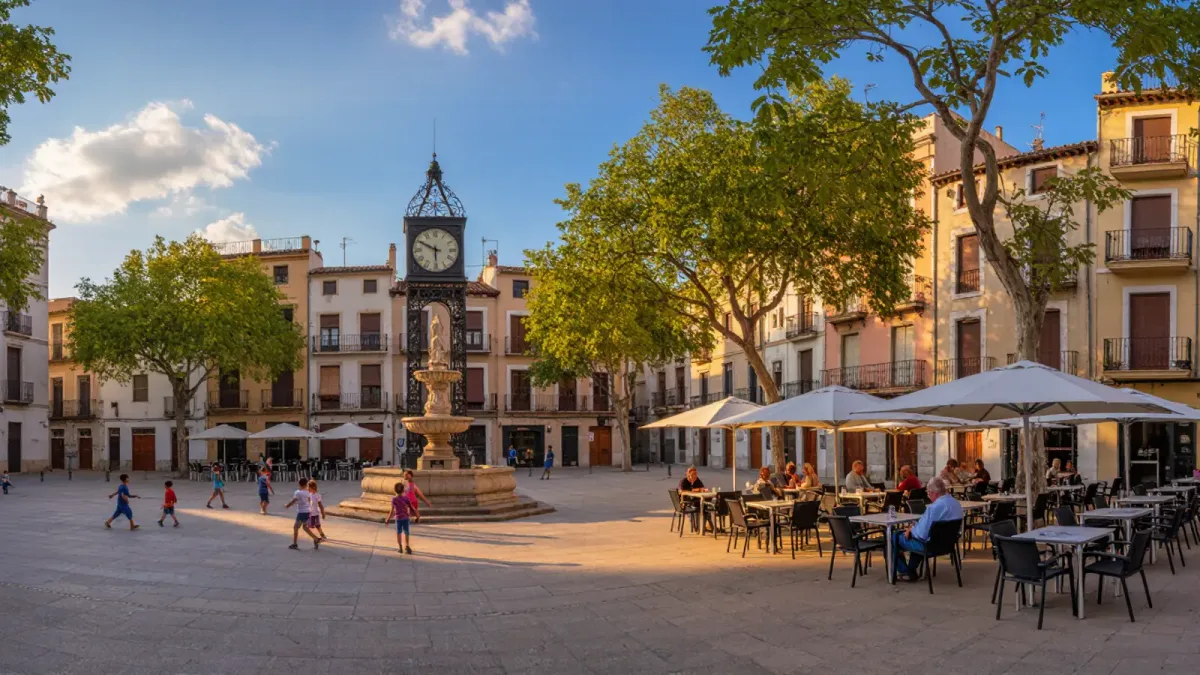
History explains it. Gràcia was a working town of weavers and artisans until the late 19th century, and when Barcelona's planned expansion reached it, the city grid was bent around existing lanes rather than through them. The result, visible today, is a district of two textures: a ring of modernista buildings — including Gaudí's Casa Vicens, his first house, on the district's southern edge — wrapped around a core where streets narrow, squares open without warning, and building heights stay low. The plaças are the district's real living rooms: the Plaça del Sol for evening terraces, the Plaça de la Vila de Gràcia around its iron clock tower for civic life, the Plaça del Diamant — of Carmen Laforet's novel — for the quieter residential register, and the Plaça de la Revolució for the Saturday market.
What should you see in a day?
- Casa Vicens. Gaudí's 1885 first house, a Moorish-and-catalan-tile composition far rawer than the better-known later works, open to visitors with timed entry as of 2026; the nearest of Barcelona's Gaudí houses to a metro stop, and the least crowded.
- The plaça circuit. Roughly one square per block: start at Plaça de la Vila de Gràcia, work north through Diamant and Sol, and finish at the Plaça del Nord's garden. Morning is café-and-market hour; from around 19:00 the terraces take over.
- Bunkers del Carmel. The hilltop anti-aircraft platform at the district's northern edge, built in the Civil War years and now Barcelona's best free viewpoint over the city to the sea. Sunset draws a crowd; the walk up from the Plaça del Nord takes about 25 minutes.
- Mercat de la Llibertat. The district's 19th-century market hall, rebuilt and trading daily, for the weekday-lunch hour that food halls do best.
How does Gràcia fit a Barcelona city break?
For most itineraries, Gràcia is the evening-and-one-morning district: the major Gaudí works on the Eixample grid — the Sagrada Família among them — sit within a 15–20 minute walk of its southern edge, so a modernista sightseeing day can end with dinner in Gràcia rather than downtown. What it is not, as of 2026, is the budget-sleeping secret it once was: the district's rooms price at central Barcelona levels, and the tourist office's own district guidance treats it as fully part of the city's offer. Its true differentiators remain free — the plaça life, the hill viewpoint, and a resident population that keeps the district's shops local rather than chain.
What does the district cost, and what does it eat?
Gràcia's price register sits below the Eixample's tourist core and above its own bohemian past. As listed in March 2026: vermouth and a tapa at a plaça terrace bar typically runs €6–10 per person; a weekday menú del día around the Mercat de la Llibertat starts near €14–16; and the district's many small international kitchens — a legacy of its student decades — cover dinner at €15–25, with tasting-menu rooms on its quieter lanes above that. Shopping is the district's second economy: independent bookshops, ceramicists, and slow-fashion ateliers cluster around the Plaça del Sol's quieter side streets, chosen here for local ownership and variety rather than price. The criterion across this primer holds throughout: location, walkability, and price range, stated once and applied evenly.
When should you go, and what should you know?
Weekday mornings are the local register; weekend evenings around Plaça del Sol are loud and young, which is the point for some travelers and a warning for others. The Festa Major de Gràcia, a week around mid-August, decorates competing streets by resident committees — a genuine spectacle that also books the district's rooms months ahead. The L3 métro (Fontana) serves the district's center, L4 (Joanic) its northern side, and the district is steep only where it climbs toward the park; the rest is flat and cobble-free by Barcelona standards.