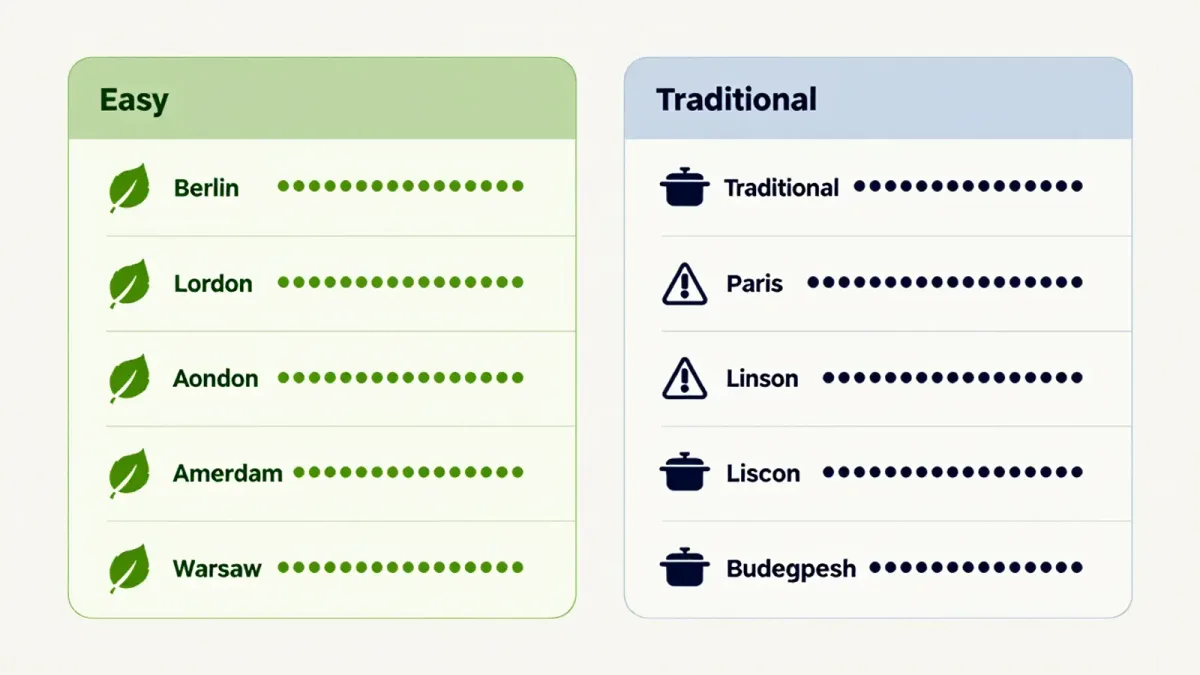
Vegetarian travel in Europe splits the continent in two. In the cities of Germany, the United Kingdom, the Netherlands, and Poland, dedicated meat-free restaurants are common and menus label themselves; in much of Southern and Central Europe, the traditional kitchen flavors vegetables with meat stock, cured fat, and fish sauce, and "vegetarian" on a menu can mean one omelet (vegetarian scene overviews as documented, April 2026). The practical result: the same traveler needs two strategies, and this guide supplies both — where to simply walk in, and how to interrogate a traditional menu so the sides do not arrive braised in ham.
This site publishes information, not dietary advice; kitchens and menus change, so confirm ingredients when the diet is strict.
Which European Cities Are Easiest for Vegetarians?
The easy tier is real and measurable: Berlin, London, Amsterdam, Warsaw, Prague, and Tel Aviv-sized scenes elsewhere run vegetarian and vegan restaurants at densities where a dedicated dinner is walkable in most districts, and mainstream restaurants label vegan options explicitly. Berlin's dedicated listings number in the hundreds; London's vegan restaurant count has multiplied over the past decade (published city dining guides, April 2026). Grocery stores add to the ease: labeled vegan aisles in German, Dutch, and British supermarkets solve breakfast and picnic days without a single restaurant.
Where Is the Traditional Menu a Trap?
The harder tier is not hostile — it is simply that the classical cooking of France, Spain, Portugal, Italy's interior, Hungary, and the Balkans treats vegetables as a vehicle for animal fat. The hidden ingredients that catch vegetarians:
- Stock and broth. Vegetable soups and risottos simmered on chicken or beef stock, routine in traditional kitchens.
- Cured pork as seasoning. Green beans braised with ham, lentils with pancetta, breads rubbed with lard — the meat is a flavoring, invisible on the plate.
- Fish sauce and anchovy. Caesar dressing, some pasta sauces, tapenade, and Asian-influenced marinades.
- Cheese and pastry fats. Animal rennet in traditional cheeses, butter versus lard in pastries — relevant to vegans above all.
The traditional kitchen's saving grace: seasonality. Where the vegetable is in season, the sides menu — contorni, guarniciones, Beilagen — is where a vegetarian eats well, once the cooking fat is confirmed.
What Vocabulary Makes the Difference?
| Language | "I am vegetarian" | The decisive question |
|---|---|---|
| Italian | Sono vegetariana/o | È cotto nel brodo di carne? (cooked in meat broth?) |
| Spanish | Soy vegetariana/o | Lleva caldo de carne o jamón? |
| French | Je suis végétarien(ne) | Est-ce qu'il y a du bouillon de viande? |
| German | Ich bin Vegetarier(in) | Ist das mit Fleischbrühe gekocht? |
| Portuguese | Sou vegetariana/o | Leva caldo de carne ou enchido? |
One distinction to carry everywhere: "vegetarian" translates cleanly, but "no meat" sometimes reads as "no red meat," and fish remains on the table in several food cultures. State the diet as a positive list — no meat, no fish, no meat broth — rather than a single borrowed word.
Which Cuisines Have Built-In Vegetarian Dishes?
Four European traditions carry vegetarians without any negotiation. Italian pasta e risotto culture offers meat-free first courses everywhere, once the broth question is settled. Spanish tapas bars run tortilla de patatas, pimientos, gazpacho, and cheese plates. Greek mezze — fava, gigantes, hortapita, grilled vegetables — is a vegetarian meal by design. And the Turkish-influenced tables of the eastern Mediterranean serve mezze and vegetable dishes as complete meals. In meat-forward Central Europe, the fallback is the dumpling, pancake, and mushroom-based classics of the Austrian-Hungarian kitchen.
How Should a Vegetarian Plan the Trip Itself?
- Book accommodation near a market district: self-catering breakfasts and picnics remove half the risk.
- In harder-tier cities, reserve one dedicated vegetarian restaurant for the trip's anchor dinner and improvise the rest with sides and mezze logic.
- Use the happy-cow style restaurant directories to pre-map districts, not to plan every meal.
- Learn the two-language formula — the diet statement plus the broth question — before arrival, not at the table.
FAQ
Is Paris difficult for vegetarians now?
Less than its reputation: the dedicated scene has grown quickly, mainstream restaurants increasingly mark vegetarian dishes, and the classic kitchen's stock habit remains the main trap. Ten minutes of pre-mapping solves most stays (city dining guides, April 2026).
Do traditional restaurants mind if only sides are ordered?
Generally no at casual and mid-range places, where mixed orders are normal. At formal restaurants, a cover charge sometimes applies regardless; a first course plus sides reads better than sides alone.
Is vegan travel in Europe much harder than vegetarian?
In the easy tier, no — vegan labeling is now stronger than vegetarian in Germany, the UK, and the Netherlands. In traditional kitchens, yes: butter, cream, egg, and rennet remove the fallback dishes that carry vegetarians, and the dedicated scene becomes essential.
What single phrase helps most?
The broth question. Most vegetarian failures in traditional European kitchens come from stock, not from visible meat — and it is the one ingredient no traveler thinks to name until it arrives tasting of chicken.