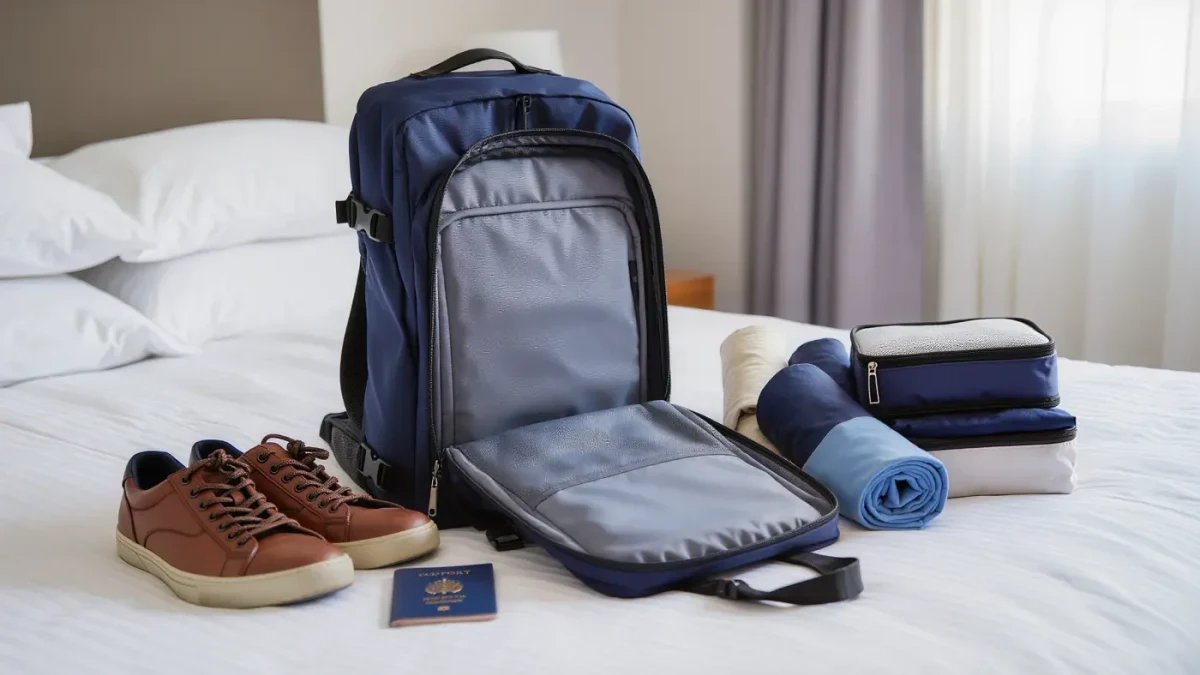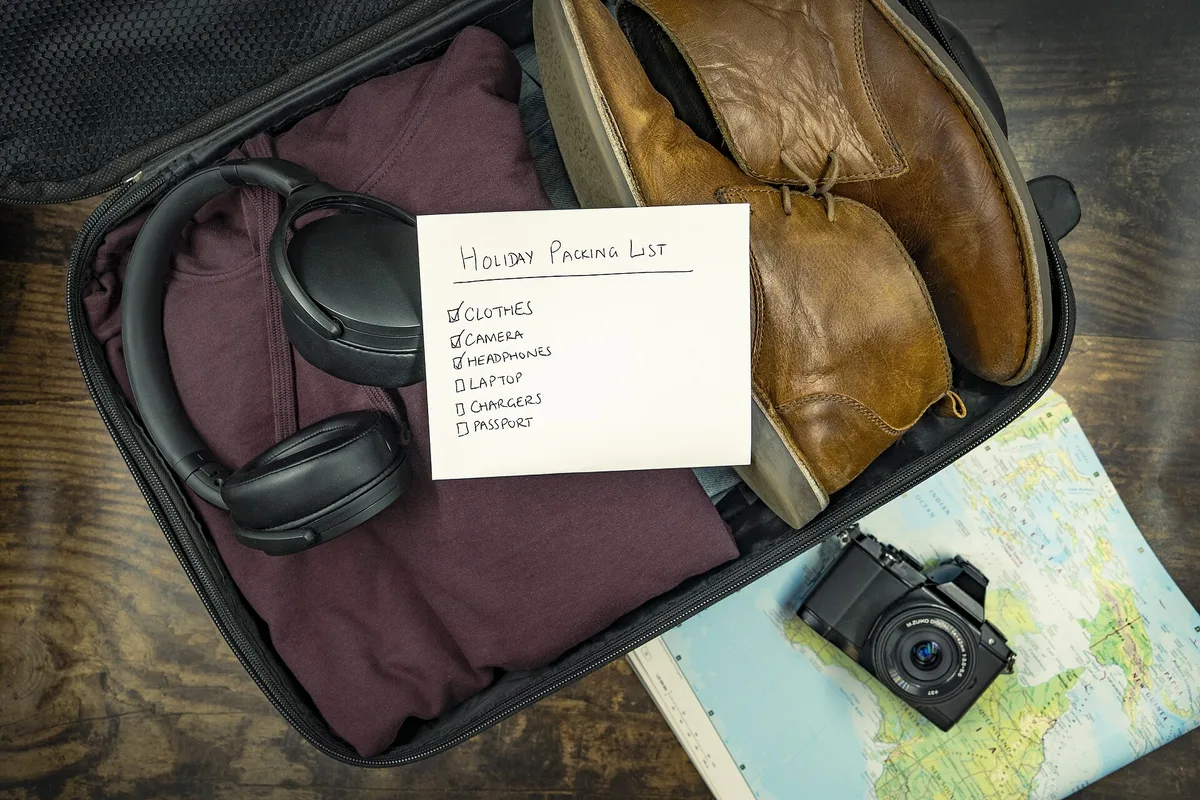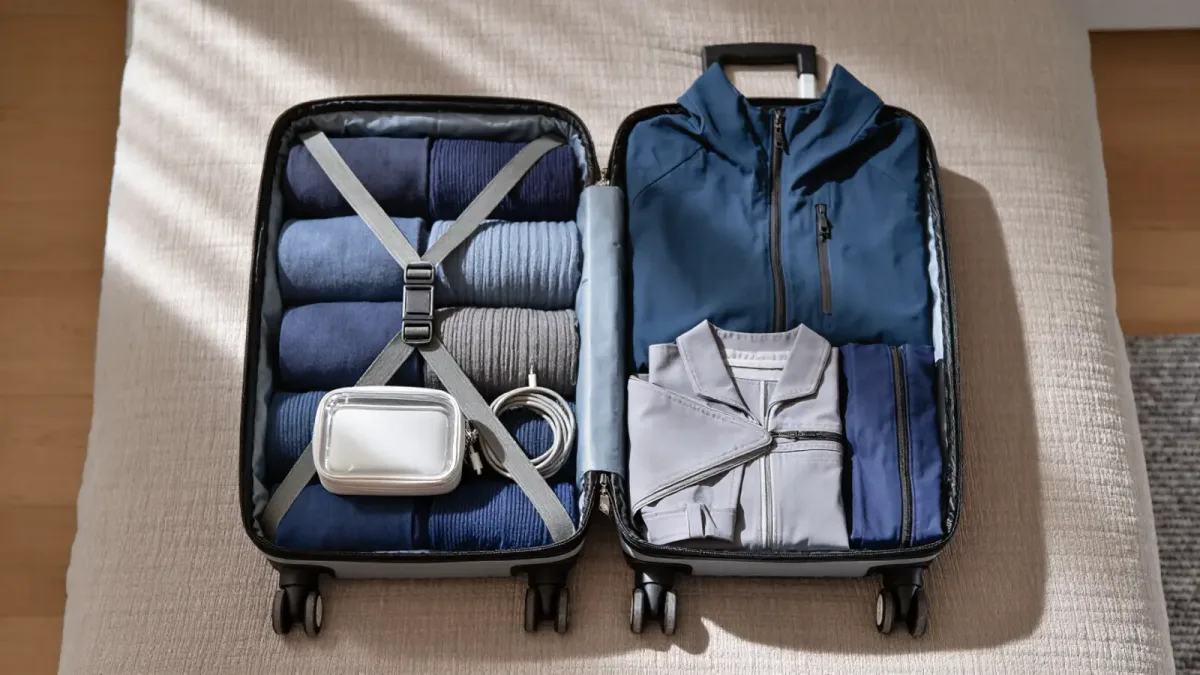
For a three-night city break, one regulation carry-on is enough: a core of seven clothing items built around one color family, worn-in walking shoes on your feet, and a strict rule of nothing you would mind losing — everything else is hotel-room clutter you pay for in airline fees and luggage storage time. The method below works for any temperate European or East Asian city in spring or autumn and adjusts to winter or high summer with two swaps described later. Recommendations are drawn from airline published carry-on limits and packing practice as listed in January 2026.
This site publishes information, not travel advice in the professional sense; airline rules vary by fare and route, so confirm your carrier's current limit before flying.
What is the seven-item core?
The core assumes three nights and four days, with laundry untouched and nothing hand-washed in a hotel sink. Pack these, all in a single restrained color family so any two items combine:
- Two pairs of trousers or one pair plus a skirt — one worn on the plane;
- Three tops, one of them presentable for a nicer dinner;
- One mid-layer — a fine sweater or cardigan that works indoors and out;
- One rain-proof outer layer, which earns its space in nearly every city month;
- Enough underwear and socks for four days, which rolls to the size of a paperback.
That is the entire clothing load. It fits a 40 × 30 × 20 cm cabin bag — the size that most European carriers accept as a free under-seat cabin item, including the 40 × 30 × 20 limit British Airways and many low-cost carriers publish for their smallest free allowance, as of 2025.
Which shoes, and what goes on your feet?
Wear the walking shoes; never pack them. City breaks are measured in kilometers — a typical sightseeing day in a compact European center runs 8–12 kilometers on cobblestones — so one broken-in pair of supportive shoes matters more than anything in the bag. If your itinerary includes one dress-code-strict venue, choose a second pair that is flat, dark, and light enough to squeeze into the bag's outer pocket; otherwise the second pair stays home.
What about toiletries and tech?
Liquids remain the binding constraint on most routes: containers of 100 ml or less must fit a single transparent bag of roughly one liter for cabin security screening, per the long-standing European Union hand-luggage rule still applied at most airports as of 2025, even where new CT scanners have relaxed it. A 50 ml of each essential covers a long weekend comfortably. For tech, one phone, one multi-country charging plug, and one short cable are the whole kit; a power bank belongs in the cabin, never in checked baggage, per airline safety rules.
How do you adjust for winter or high summer?
Two swaps handle the extremes. In winter, replace the rain layer with a packable down or wool coat worn onto the plane — bulkiest item on your body, never in the bag — and add a hat and gloves, which compress to nothing. In high summer, drop the mid-layer and outer layer, add a third top, and accept that most Mediterranean cities of July need nothing more. What survives in every season: the single color family, the worn-in shoes, and the refusal to pack "just in case" items — a city has shops.
What do experienced city-breakers leave at home?
Four categories account for most wasted space. First, guidebooks and printed maps — a phone covers both, and a paper backup fits a pocket, not a bag. Second, more than one book or screen for a three-night trip; the airport kiosk exists. Third, "just in case" clothing — the formal outfit, the extra sneakers, the third coat — because a city has shops and, at worst, a laundromat. Fourth, full-size anything in the toiletry kit: hotel and rental-apartment bathrooms on a city break reliably supply soap and shampoo, so the kit shrinks to dental items, medication, sunscreen, and one cosmetic bag's worth of the rest. The pattern behind all four is the same: pack for the ninety percent of the itinerary you planned, and let the city handle the other ten.
Why carry-on only, in the end?
The arithmetic is simple: a carry-on-only traveler walks off the plane while others wait at the carousel, fits hotel storage and station lockers without thought, and can move between neighborhoods on foot when the metro strike hits. For a trip of three nights, that mobility is the entire advantage of the city-break format — and the bag is what buys it.