For a beach town that pairs real sand with a walkable core, the shortlist runs from Ogunquit in southern Maine down to the villages of Cape Hatteras National Seashore in North Carolina, with Chincoteague Island, Virginia, between them. The pick suits travelers who weigh beach quality, street-level strolling, and dated access costs together. The qualification is season: fees and services move with the calendar, so every number below carries a date.
The phrase "best atlantic beach towns" returns a long list, and most of it is unranked by method. The comparison below narrows the field with named criteria: sand on the record, a town core a visitor can cover on foot, and costs listed on official pages as of October 2026. More city and coast guides in the same spirit sit on the destinations hub.
Each entry stands on its own: what the town is, why it fits those criteria, and the details a planner needs, with fees as listed in October 2026.
Ogunquit, Maine: Pale Sand and a Coastal Path
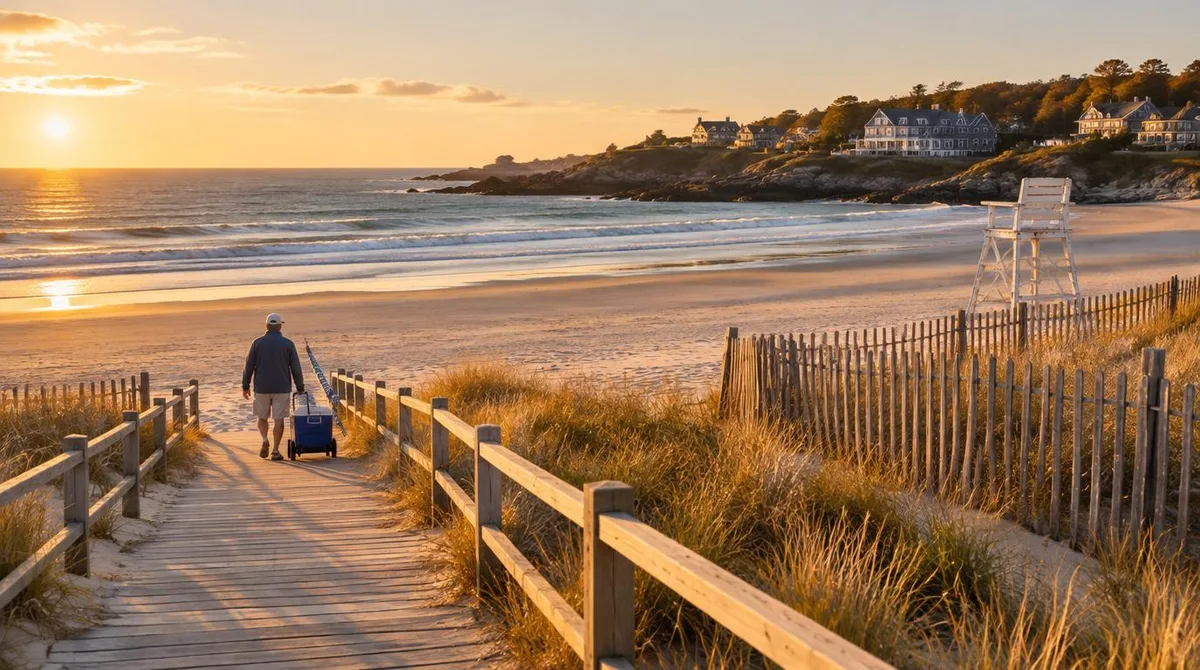
Ogunquit is a resort town in York County with 1,577 residents at the 2020 census, according to its Wikipedia entry. The record describes a beach of fine pale sand on a barrier peninsula, joined to the mainland by a bridge across the Ogunquit River in 1888. Marginal Way, a scenic trail from the 1920s, runs along the shore from Perkins Cove to Ogunquit Beach, and the main beach draws walkers through the year. An art colony took root after 1898, and that history still shapes the village center. The town is chosen here for one compact pairing: path, cove, and sand within a single walk, no car needed once a visitor parks.
Chincoteague Island, Virginia: A Gateway and Its Fees
Chincoteague sits beside the Virginia district of Assateague Island National Seashore, a district that includes Chincoteague National Wildlife Refuge. The National Park Service states that entrance passes work in both the seashore and the refuge, so one payment covers the pair. Fees as of October 2026: a private vehicle pass costs $25.00 and stays valid for seven days, a motorcycle pass is $20.00, and a visitor on foot or by bicycle who is 16 or older pays $15.00. Children under 16 enter without a pass, and the Virginia entrance station sells a one-day vehicle pass for $10.00. The island earns its place through simple math: one dated fee, seven days of access.
The Outer Banks: Three Islands Behind the Dunes
Farther south, Cape Hatteras National Seashore protects parts of three barrier islands: Bodie Island, Hatteras Island, and Ocracoke Island. The park service notes beach and sound access ramps, campgrounds, nature trails, and lighthouses on all three, which suits drivers who want distance rather than a single strand. The service describes the coast as a thin, broken strand of islands that has survived the wind and sea for thousands of years. Choose the Banks over the two towns above when the plan favors long shoreline and lighthouse stops over one town center.
Planning Notes: Free Days, Seasons, and Booking
A few dated notes help the budget. The park service lists free-entrance days each year for sites that charge fees; as of October 2026, the remaining 2026 date on the Assateague schedule was November 11, Veterans Day, and other fees such as camping still apply. The quieter windows this comparison favors are May, early June, and late September, when the criteria above are easiest to meet at a slower pace; room rates move with those seasons, so check current listings before a deposit. The district-first habit also transfers inland, as the primer on Trastevere in Rome shows for city breaks.
Conclusion: Matching the Coast to the Plan
The comparison lands where it started. Pick Ogunquit when a compact, walkable village with a path to the sand is the goal. Pick Chincoteague when a refuge beach and a single dated vehicle fee matter most. Pick the Outer Banks when long shoreline, campgrounds, and lighthouses outweigh a town center. All three meet the stated criteria: sand on the record, a core a visitor can manage on foot or by ramp and trail, and costs published on official pages as of October 2026. The season decides the rest. For related coverage, see Zermatt: A Primer for the Car-Free Alpine Village Under the Matterhorn.