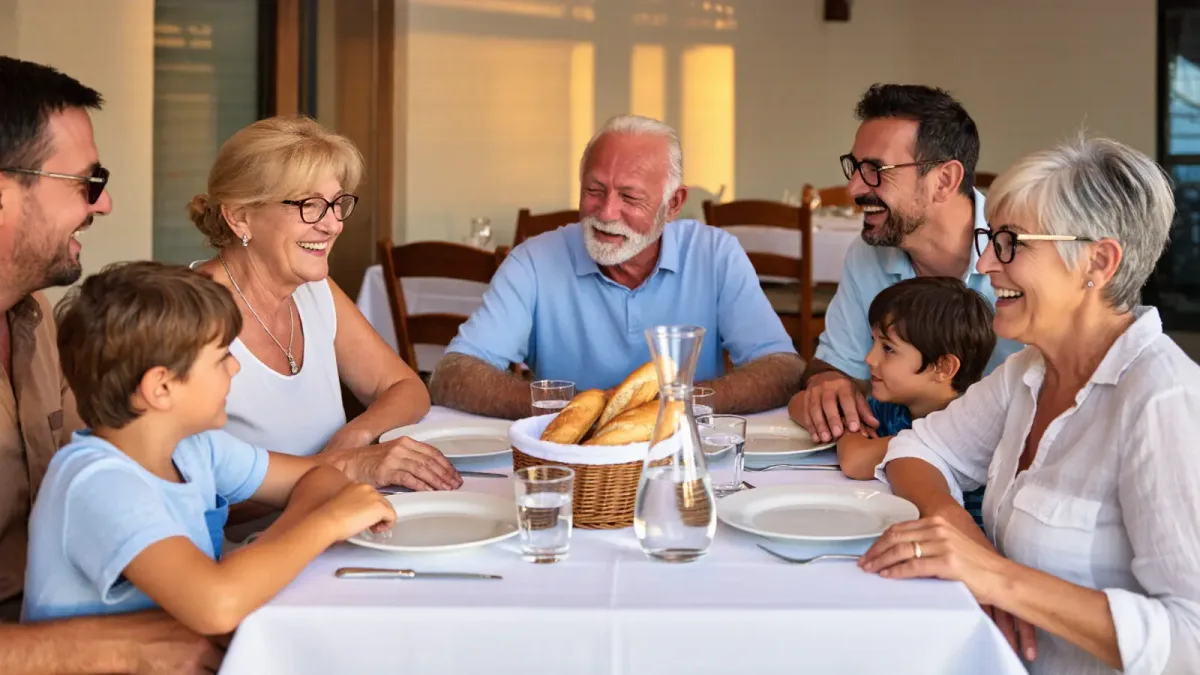
Most European table rules protect two things — the pace of the meal and the cook's work — and the traveler who keeps hands visible, bread on the plate, and forks down between bites is welcome everywhere.
Kosher-observant travelers navigate by three certainties — the hechsher on the wall, the historic Jewish quarter, and the Friday-before-sundown clock — and every major city supports all three.
In most major European and North American cities a certified halal dinner sits within a transit ride — the working questions are certification levels, the seafood-and-vegetable fallback, and hotel breakfast.
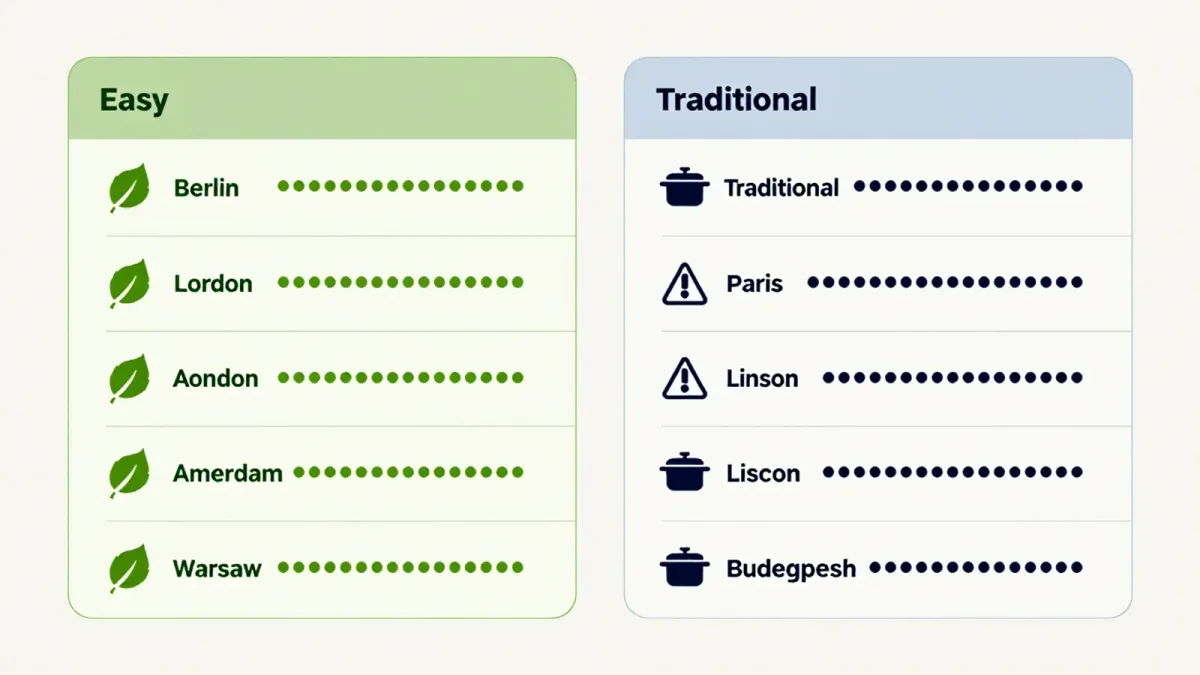
Berlin and London run dedicated vegetarian restaurants by the hundred, while traditional kitchens from Lisbon to Budapest build menus on meat stock — the vocabulary and the strategy differ by country.
Five questions — what is it, how big, how spicy, what is in it, how is it eaten — turn any untranslatable menu line into an informed order, and no waiter minds being asked the first one.
The same cup means different things across Europe — a three-minute standing shot in Milan, a four-hour chair in Vienna, a pastry-and-refill ritual in Stockholm — and the local order sheet is easy to learn.