The working formula is simple: buy the child a seat, pack for the checkpoint rather than the fantasy, and give every day one anchor with a wide margin. The Transportation Security Administration and the Federal Aviation Administration publish the rules behind those three moves. Both sets were checked and current as of October 2026.
This traveling with kids guide follows the shape of a trip: packing, the flight, then the days on the ground. The advice leans on official pages rather than forum folklore. Families planning a full city break can browse the Guides section for route-level detail.
One caveat frames the rest. Screening rules and seating policies shift with staffing and seasons, so a short recheck during the week of departure is part of packing. The FAA page carried an update dated August 18, 2026, when it was reviewed for this piece.
Pack for the Checkpoint First
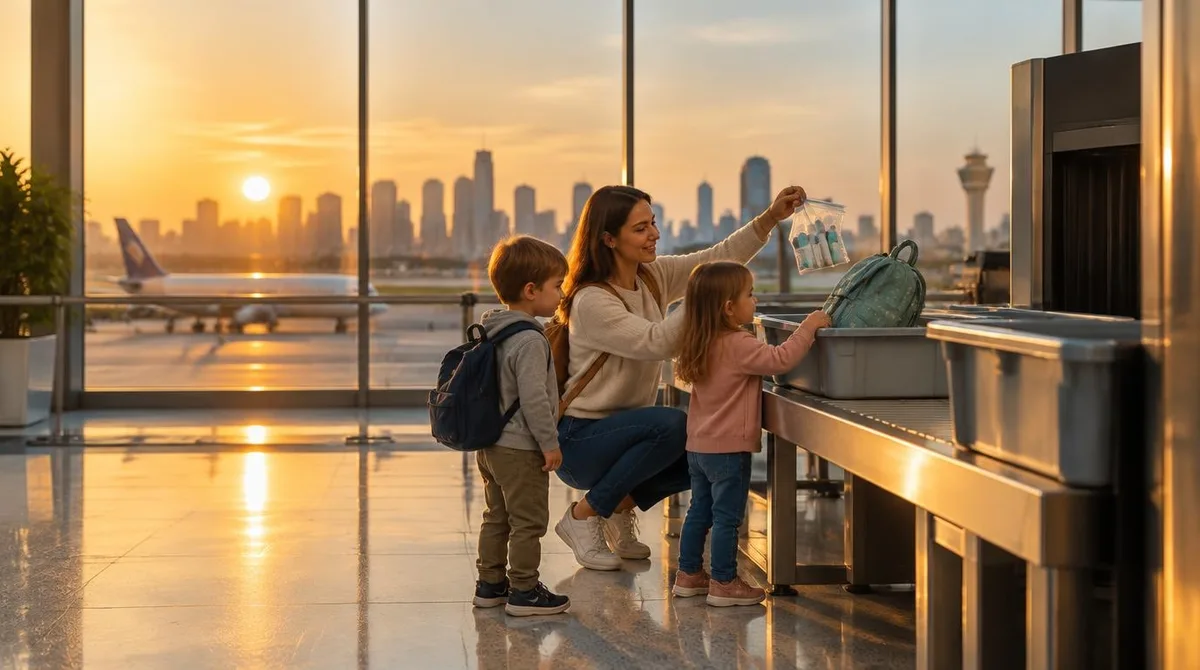
TSA runs modified screening for children who appear to be 12 and younger, per its family travel guidance, and officers consult a parent or guardian along the way. Young travelers keep their shoes, light jackets, and headwear on. Standard rules apply from age 13, and every carry-on is screened regardless of age.
Milk and snacks clear security in generous quantities. Formula, breast milk, toddler drinks, and toddler food, including puree pouches, are allowed past the standard 3.4-ounce limit and need no quart-sized bag. Declare them at the start of screening, because they pass through separately, and ice packs ride along even when no milk is present.
Gear gets a ride of its own. Strollers, car seats, and backpacks go on the X-ray belt, and children are carried through the metal detector in an adult’s arms. Questions get live answers from AskTSA, staffed from 8 a.m. to 6 p.m. ET, as posted in October 2026.
Buy the Seat, Bring the Right Restraint
Children under two may ride on a lap, but the FAA discourages the practice. Its guidance is direct: the safest place for a small child is an approved child restraint system in a purchased seat, and buying the ticket is the only way to make sure that seat is available, per the FAA’s child safety page.
The label decides. A restraint must be certified for aircraft use, and the required wording reads “this restraint is certified for use in motor vehicles and aircraft.” Airlines must allow a passenger under 18 to use a properly labeled, weight-appropriate seat. Boosters, backless restraints, and baby carriers are barred during taxi, takeoff, and landing.
The CARES harness covers the gap years. It is FAA-certified for children up to 40 inches tall who weigh between 22 and 44 pounds, and it works with the aircraft’s own seatbelt.
Set Expectations Before Departure Day
The FAA publishes short, child-facing videos that explain what an airport and a flight actually feel like, turbulence included. Watching one the night before lands better than a lecture at the gate. Expectations do the quiet work of prevention.
The checkpoint has its own script. Toys, blankets, and beloved bags ride the X-ray belt like everything else, and saying so in advance removes the day’s most common surprise. Children are never separated from a parent or guardian during screening.
Pace the Ground Days With One Anchor
A city day holds together when it holds one fixed plan. Pick a single anchor, a museum block, a park hour, or a long market lunch, and let the rest stay loose. Start early, return flat, and leave slack before dinner. Readers following this should also see How to Pack for a City Break: A Carry-On Method for Three Nights.
Margins matter more than mileage. One adult carries the tickets, the maps, and the day’s plan, and a primer on staying connected abroad with eSIM and local SIM cards keeps the whole family findable when phones scatter.
Conclusion: Margins Make the Trip
Traveling with children rewards the same virtues a good concierge applies: preparation, margins, and a steady voice. Buy the seat, declare the liquids, and keep each day to one anchor. The rules are published, the procedures are designed to be gentle, and the trip improves the moment the packing list matches the checkpoint.